
Once labelled as niche and boutique, farm-to-door beef businesses have continued to grow from the surge in consumer demand triggered during the COVID-19 era.
Across South East Queensland, producers are building integrated businesses around locally raised beef, strong food provenance and direct connections with customers.
But their continued growth – and, in some cases, their long-term viability – depends heavily on access to commercial abattoirs willing and able to provide service kills.
With that access becoming increasingly scarce and uncertain, producers are calling for greater collaboration and renewed consideration of local, mobile and on-farm processing options.
Meet the producers selling direct
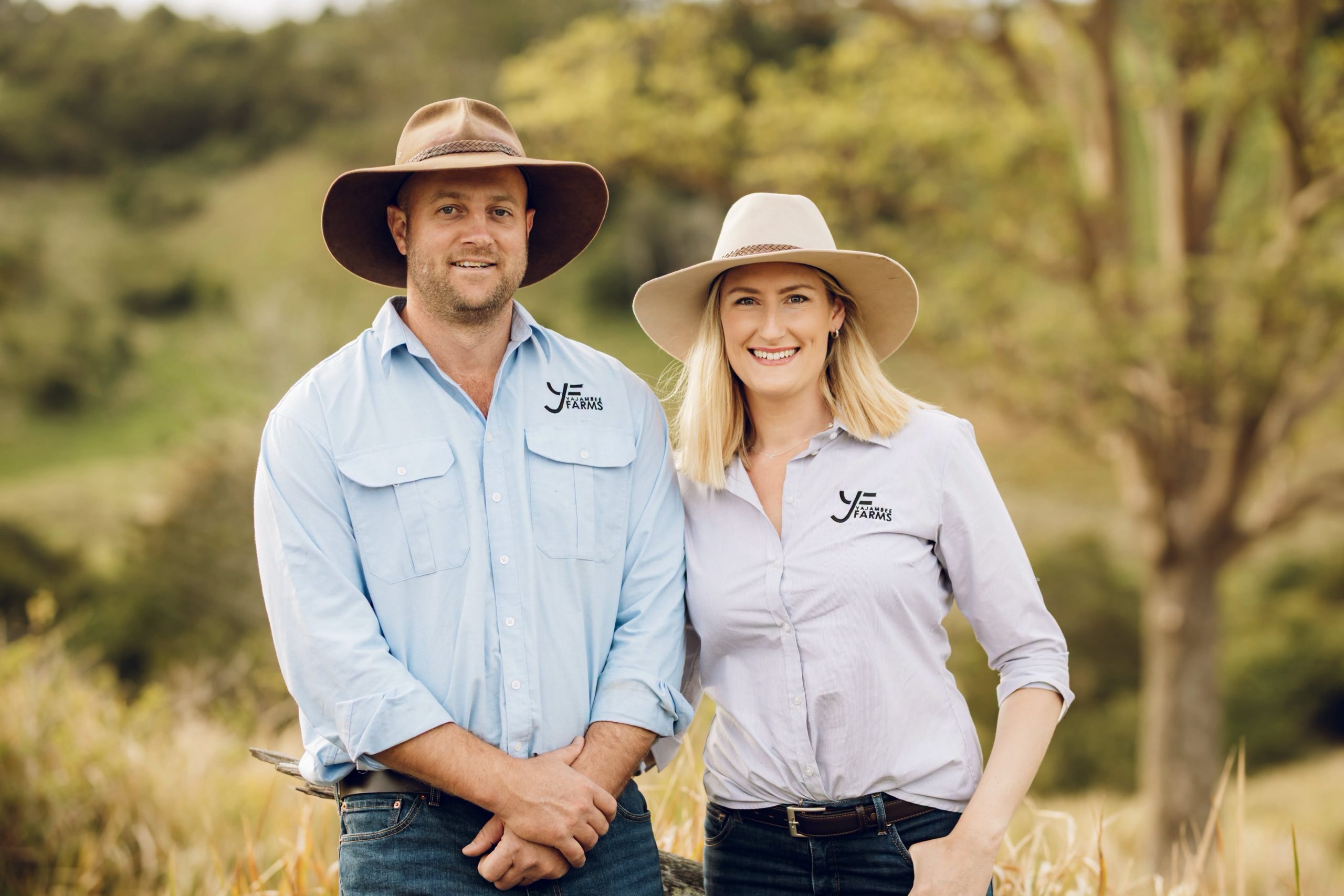
Perched on a hill overlooking rolling green valleys at Mt Mee in Queensland’s Moreton Bay hinterland is Yajambee Farms.
Owners Gabe and Jamie Yates traded in full-time careers in professional services and small business ten years ago to build their dream of raising Angus cattle on a farm and creating a lifestyle-friendly branded-beef business.
Yajambee Farms today operates as an integrated stud, grassfed beef producer, on-farm processor and beef delivery business that also offers farm-stay accommodation.
The paddock-to-plate startup runs approximately 200 Angus cattle and delivers a variety of grassfed beef packages on a regular basis to a growing customer base across Southeast Queensland.
Orders are placed online with the beef either delivered directly to each customer’s door or collected on-farm.
Cattle are processed at a local commercial processing facility with carcases returned and packaged in an on-farm butchering and packaging facility.
Gabe and Jamie say the model allows their customers to feel a deep and personal connection to where their food comes from. Buying fresh from the farm in packs ranging from 10kg to 50kg gives customers value for money in a tight economic environment, with the additional benefits of lower food kilometres, a reduced carbon footprint and supporting local farming families.
Gabe and Jamie’s long-term vision is to create a direct supply ecosystem incorporating other local farmers in the region.
Further up the Queensland Sunshine Coast flanked by the Maleny escarpment are Dan Cork and Jake Sullivan, two well-known locals and business partners with deep roots in Australian agriculture, the dairy industry and branded beef production.
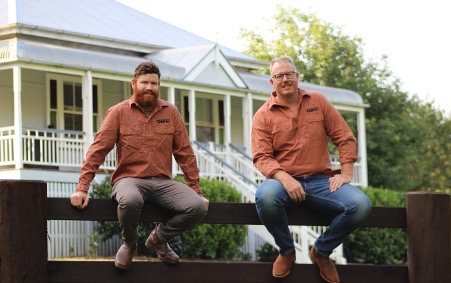
Maleny based OBI Pasture beef producers Dan Cork (left) and Jake Sullivan.
Several years ago they launched OBI Pasture Co selling homegrown grassfed beef raised on the rich volcanic soils and cool climate pastures of the high-rainfall Maleny region.
Their animals are processed locally, which Dan and Jake believe not only produces a superior tasting beef eating experience but also multiple positive outcomes for the land, the environment and the local community.
They operate a direct-to-customer delivery service and an on-farm shop pick up option, and run regular deliveries to customers in Brisbane and across South East Queensland.
Dan and Jake say the marketing strategy they have used to grow their database of loyal customers is very simple: “seeing is believing”.
Jake sees the growth that occurred in the local craft beer brewing industry in Australia as a template for locally grown beef.
“It is possible the direct to customer beef supply sector may go through the same cycle as the disrupters and innovations cut deeper into the big corporate beef supply chains business model, however in the end the market and the consumer will decide.”
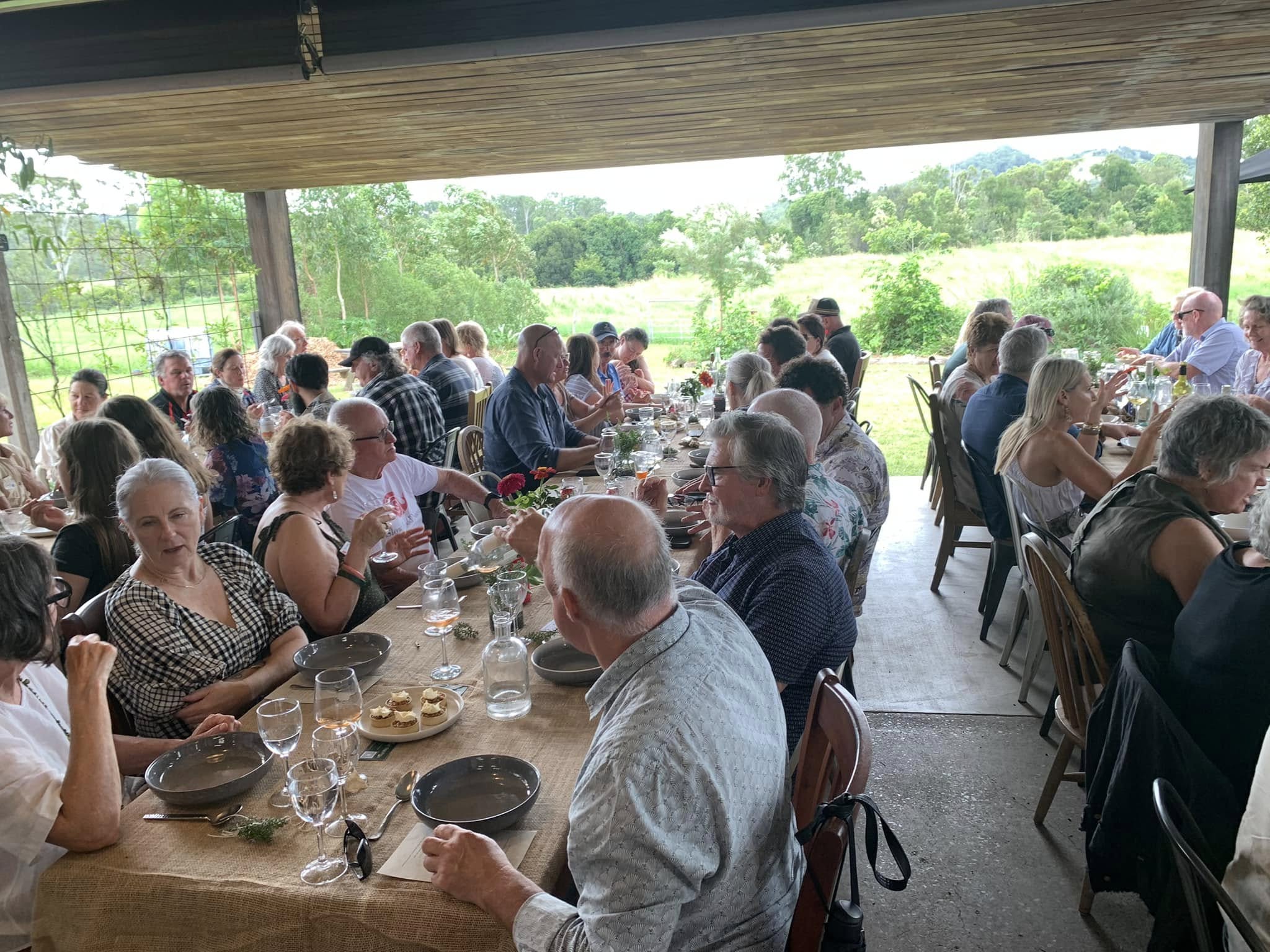
Picture: Kandanga Farm Store
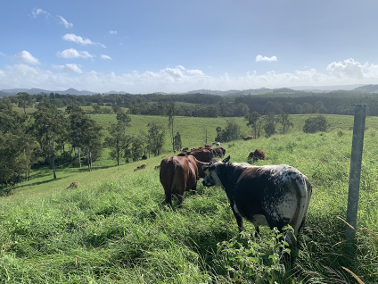
Further inland in the Mary Valley near Gympie, regenerative agriculture advocates Tim and Amber Scott operate an organic beef farming business, the K2 Organic Beef brand and the Kandanga Farm Store and Butchery.
Their integrated farming and beef operation sells grassfed certified organic branded beef to local retailers and resellers, rather than selling directly to the public, with a maximum delivery distance radius of around 75km to the various outlets they supply.
Tim was responsible for setting up the first official “slow food” commercial farming enterprise in Australia.
While these businesses are demonstrating there is a ready supply of food provenance-focused consumers searching for new food connection experiences, they all agree that there is one pressing concern in particular for the future of the long-term viability of small brands and farm-to-consumer-direct beef.
That is their reliance on larger commercial meat processing facilities to provide access to service kills, without which they cannot operate.
Study highlights service kill issue
A study titled Fragility to Resilience: Local meat processing in Australia at a crossroads highlighted that access to local processing is becoming a serious national food resilience issue, affecting livelihoods, regional economies and food system diversity.
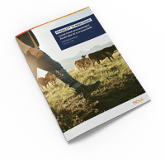
The research drew on a national survey of over 450 producers and 20 processors, with key findings including that local processing is what enables regenerative practices, direct-to-market models and local supply chains to function and grow.
That access is becoming increasingly fragile as two-thirds of producers say their current processor does not meet their needs, and nearly one in ten reports having no access at all.
As abattoirs closed, consolidated or move away from service kill arrangements, paddock-to-plate and provenance-based businesses are becoming harder to sustain, increasing pressure on producer viability and creating cascading consequences for regional jobs, food system diversity, animal welfare and consumer choice.
“It is a risk we need to manage that we do at times rely on the goodwill of the large processing plant managers or the down time gaps in the big customer kill cycles to get our stock processed at an accredited facility,” Jake said.
“These can also be located some distance away from our farms and come with a significant cost imposition and philosophical non-alignment with our local grown and local processed mantra.”
Tim Scott wants to help small food start-up businesses in the Sunshine Coast region develop a similar slow food, local grown, local eaten and low food-miles ecosystem based on organic beef production and a local reseller distribution business model.
“We need to be more responsive to the growing need for small farm-based beef producers to reduce their reliance on other,” he said.
“Large processors may not with all good intent be able to continue to factor local service kills into future business decisions, when their primary customers are the big corporate beef players.
“If we want to control our future we need to address these barriers to the expansion and evolution of our business model, because if we fail the massive potential of the region to secure its place as the food bowl for South East Queensland may be at risk.”
‘Collaborate rather than compete’
Jacki Hinchey is the Mt Mee based Membership Manager for the Sunshine Coast Food and Agribusiness Network (FAN) foodagribusiness.org.au, a regional South East Queensland membership-based food and agribusiness advocacy, promotional and business development and support organisation.
FAN works to assist its membership of self-sufficient small to medium food companies and agribusinesses to identify markets, connect with potential partners and deliver local products to customers in the highly populated South East Queensland region.
Jacki said the direct-to-customer delivery and ‘provenance-before-price’ model was proving to be viable for some small farming businesses in the region, as more nearby consumers looked for a more sustainable, local and personal food purchasing experience.
She believes the next step in addressing the challenges of securing access to local processing for local small scale beef producers is for local operators to collaborate rather than compete and build a strong commercial business case for change to the status quo.
The Australian Meat Industry Council’s policy on on-farm meat processing facilities in Australia emphasises the importance of high animal welfare standards and the need for system and regulatory reform to support on-farm, mobile or micro- processing.
It supports the meat industry’s strong biosecurity, traceability and protocols at processing facilities and notes that best practice animal handling at processing facilities can differ from animal handling on-farm and that adequate training of processing operators is required. It also recognises that there may be demand for alternative small-scale livestock processing, particularly in the instance of specialised producers and/or retailers being unable to access custom processing through commercial means.
It also acknowledges that there may be requests for system and regulatory reform to enable the use of on-farm, mobile or micro-processing, but highlights the importance of ensuring that any changes must also preserve the integrity of the safety systems that underpin the industry and protect animals and consumers.
Gabe and Jamie, Dan and Jake, Tim and Amber and Jacki agree with these policy settings and why the industry as a whole must be involved in any change process.
But they also believe it is time for beef supply chain leaders and policy makers and regulators to review the current operating model for safe food standards governing the field harvesting of livestock in an on-farm environment and help to find solutions that help to sustain a growing and popular source of locally produced beef for an increasing cohort of city-based beef customers.
into a unique and well structured article. Ensure the new content is plagiarism-free, well-organized, and formatted for seamless integration into WordPress. Use appropriate HTML tags (e.g.,
,
,
) and enhance readability with proper formatting



