

Red Meat Prices Drive Inflation in Australia
Source: Rabobank
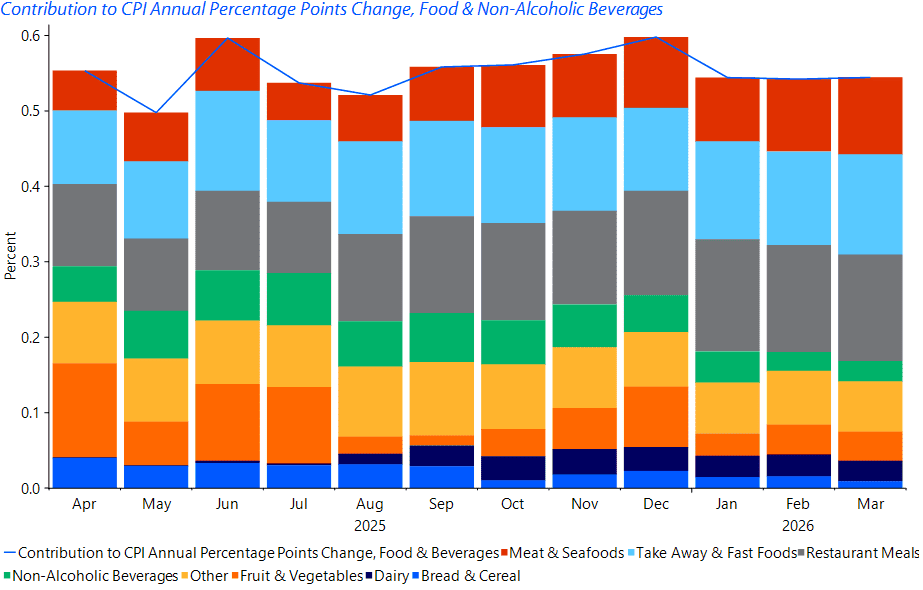
Recent data from the Australian Bureau of Statistics reveals that significant increases in red meat prices are contributing to rising inflation rates in Australia. The Consumer Price Index (CPI) for March shows a headline inflation rate of 4.6% year-on-year, markedly up from 3.7% in February and reaching its highest rate since September 2023.
Key Contributors to Inflation
According to Rabo food retail analyst Michael Harvey, meat prices, particularly for beef and lamb, remain under pressure, showing a year-on-year inflation rate of 11.8%. This surge is primarily supported by robust local livestock markets.
Coffee prices also represent a significant factor in overall inflation, climbing 10.7% year-on-year in March, largely driven by global price pressures.
Food Price Inflation Trends
While the headline annual inflation is climbing, the acceleration is not predominantly food-driven. Overall food price inflation has been steady, hovering slightly above 3%, a level maintained for ten consecutive months.
Concerns persist as further price inflation in various food sectors is anticipated due to escalating costs along the food supply chain, largely linked to geopolitical tensions from the Middle East conflict.
Household Cost Pressures
Despite a moderation from the high peaks of late 2022, food inflation significantly impacts household costs due to its substantial weight in the CPI. Harvey notes that fresh produce prices show mixed results, with overall fruit and vegetable prices up 1.8% compared to last March. Notably, milk prices rose by 4% year-on-year in the same quarter.
Harvey emphasizes that the ongoing geopolitical risks necessitate close monitoring. “Australian households are not out of the woods,” he states, anticipating further price inflation across several food categories in the near future.
Impact of Geopolitical Factors
The Middle East conflict is inducing increases in fuel and fertilizer costs at the farm level, which consequently raises post-farmgate expenses for food and beverage manufacturing, including processing, distribution, and packaging costs.
As consumers grapple with financial pressures, there is a noticeable shift in discretionary spending, affecting food purchasing behavior significantly.
Source: Rabo
Feel free to customize the content further or let me know if you’d like any adjustments.


