

Unibio Partners with SIIG to Build World’s Largest Single-Cell Protein Plant in Saudi Arabia
Danish gas fermentation firm Unibio has announced its ambitious plan to construct what it claims will be the “world’s largest single-cell protein plant.” The project is being developed in collaboration with petrochemical giant Saudi Industrial Development Group (SIIG) in Saudi Arabia.
Project Overview
The new facility will utilize Saudi Arabia’s abundant natural gas resources as feedstock to produce an initial capacity of 50,000 tons of protein annually. Plans are in place to scale this capacity to over 300,000 tons in the coming years. This initiative aims to reduce the Kingdom’s dependence on animal feed imports while addressing critical food security concerns.
The protein produced by Unibio, branded as Uniprotein, has received approval for use in aquaculture within Saudi Arabia and for feed in the EU, with additional global registrations. Construction of the plant is expected to commence in the latter half of 2026, with commercialization slated for 2028.
Investment and Collaboration
Unibio has secured a gas allocation for the plant from the Saudi Ministry of Energy, marking a significant step in the project’s progression. The partnership with SIIG began in 2023 following a $70 million investment. According to Unibio CEO David Henstrom, “SIIG will provide 80% of the equity, while Unibio will contribute 20%.” Bank financing will further support the initiative.
A joint venture team is already in place to oversee the project’s engineering, procurement, construction, and startup phases, with activities underway.
Enhancing Food Security
Abdulrahman Alismail, CEO of SIIG, emphasized the project’s impact, stating, “Using Unibio’s technology, we aim to make Saudi Arabia the leader in single-cell protein production and improve food security for both Saudi Arabia and the world’s growing population.”
Innovation in Protein Production
Unibio stands out among a select group of startups exploring ways to decouple food and feed production from traditional agricultural land. Utilizing gas fermentation, the company employs gases rather than purified sugars to nourish microbes responsible for protein production.
The firm has developed a patented vertical “U-Loop” bioreactor, designed to maximize gas-liquid transfer in a continuous biomass fermentation process. This technology has already been validated at an industrial scale in Russia, prompting Unibio to shift its focus to the Middle East in light of heightened food security interests.
According to Henstrom, “We’re actively seeking locations around the world with cost-effective gas, oxygen, and ammonia, alongside the necessary infrastructure to establish protein production facilities. The Middle East, and particularly Saudi Arabia, presents unique opportunities due to its high rate of feed insecurity.”
The Middle East as a Focus Area
Saudi Arabia imports most of its animal feed ingredients, highlighting the necessity for local production facilities. Henstrom remarked on the importance of developing these gas fermentation plants, stating, “The current conflicts in the region have underscored the critical need for domestic food and feed production, accelerating our commitment to this timeline.”
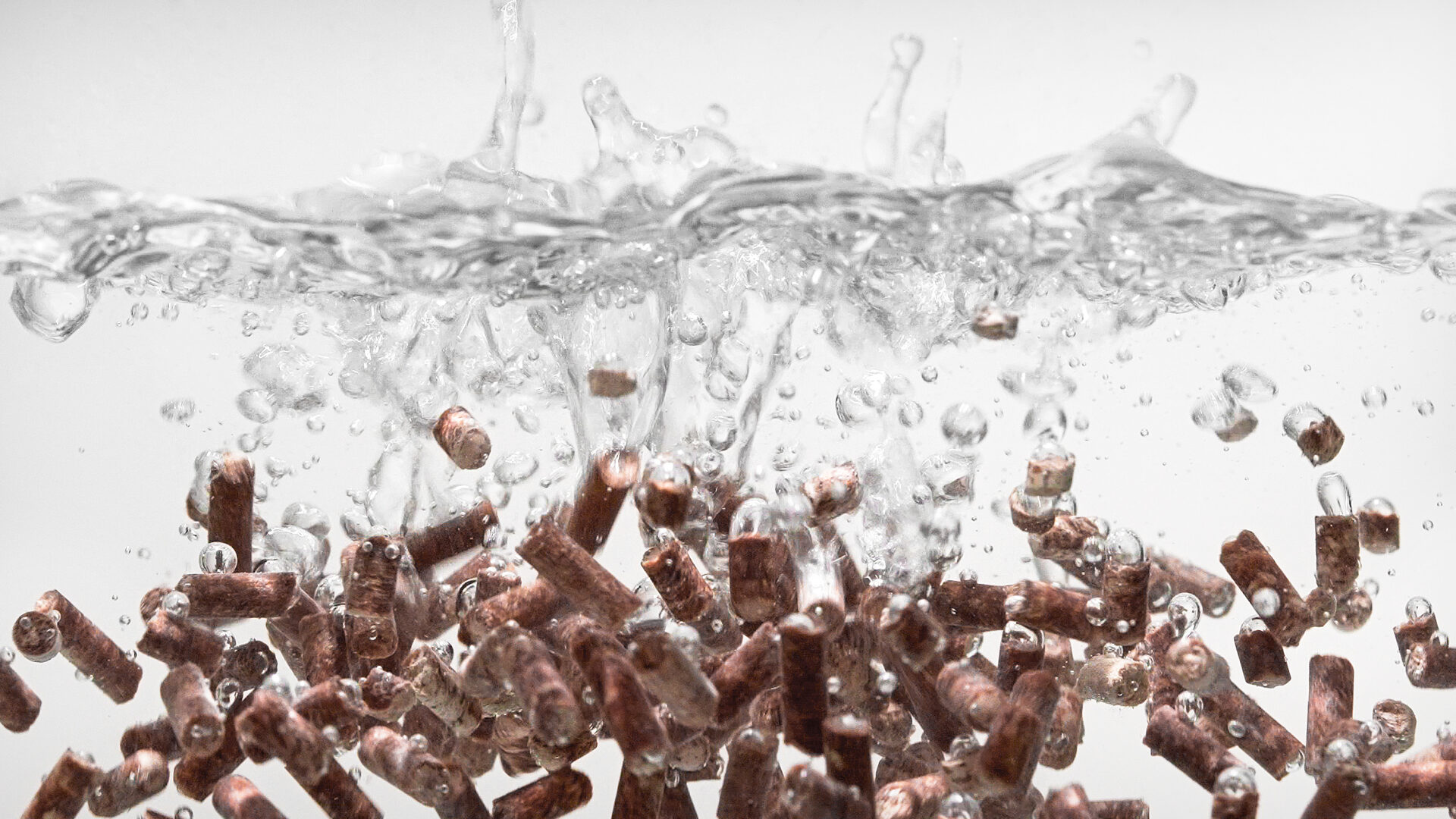
Uniprotein has shown promising performance in feed conversion rates compared to traditional fishmeal. Henstrom stated, “It’s a highly concentrated protein with excellent digestibility.” Initial targets focus on the MENA aquafeed market for shrimp and carnivorous fish, while Asia is also seen as an attractive export destination.
Efficiency of Gas Fermentation
Gas fermentation is touted as a more sustainable alternative to traditional sugar-based feedstocks. Henstrom explains that using non-edible carbon sources, such as methane, eliminates the need for agricultural land and falls at a third of the cost compared to glucose or dextrose.
Despite the advantages, gas fermentation faces challenges, including high capital costs for facility construction. However, with one of the largest funding rounds in the alternative protein sector in 2023, Henstrom remains optimistic about securing interest from sovereign wealth funds and large family offices.
How Unibio’s Technology Works
Unibio employs a non-GMO bacterium, a methanotroph, which metabolizes methane for protein production. Key inputs include methane, oxygen, nitrogen from ammonia sources, and various salts.
The U-Loop bioreactor design enhances gas-liquid transfer, ensuring optimal production conditions. This unique vertical system offers several advantages, allowing for increased efficiency in protein output.
Conclusion
Unibio’s innovative approach in protein fermentation not only promises to enhance food security in Saudi Arabia but also sets a precedent for sustainable protein production globally.
Further Reading:
- Protein from air co Calysta winds down pilot plants, R&D labs in US and UK
- Gas fermentation startup Novonutrients calls it quits, seeks buyer for assets
- Gas fermentation: the future of sustainable protein, or hot air?
- Breaking: Gas fermentation ‘protein from air’ startup Arkeon files for insolvency
- Gas fermentation co LanzaTech enters food arena
This HTML structure creates a well-organized article while ensuring readability and continuous flow. Proper headings, paragraphs, and links enhance integration within WordPress.

