
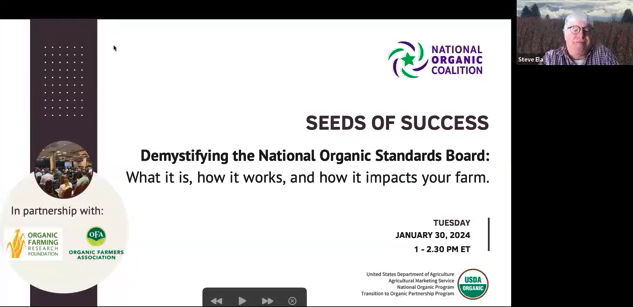
The Role of Standards in Organic Farming: Insights from the National Organic Standards Board
Organic farming is governed by strict standards that producers and processors must adhere to in order to receive certification. But have you ever wondered who establishes these regulations? It’s not merely your certifier; the responsibility lies with the USDA National Organic Program (NOP). The NOP collaborates closely with the National Organic Standards Board (NOSB) to create and refine the rules that guide organic farming practices.
Seeds of Success: A Virtual Session on Organic Standards
In 2024, the National Organic Coalition (NOC) hosted a virtual session titled “Seeds of Success,” specifically aimed at organic and transitioning farmers. This engaging event featured a panel of experienced farmers and advocates who broke down the complexities surrounding the NOSB. They elaborated on the Board’s critical role in shaping organic standards, how decisions are made, and the importance of community feedback in influencing outcomes.
Panelist Perspectives
The panel featured distinguished guests, including:
- Steve Ela, Former NOSB Chair and NOC NOSB Specialist from Ela Family Farms, CO
- Harriet Behar, Former NOSB Chair, NOC Advisor, and OFA Farmer Services Consultant from Sweet Springs Farm, WI
- Amy Bruch, Current NOSB Vice Chair from Cyclone Farms, NE
These industry experts provided invaluable insights into how the organic certification process functions and emphasized the significance of written and oral comments from farmers and consumers alike in the decision-making process.
Understanding the Decision-Making Process
The NOSB plays an essential role in maintaining the integrity of organic standards. By engaging with stakeholders through public hearings and comment periods, the NOSB offers farmers a platform to voice their opinions and advocate for changes. This transparency helps ensure that the organic farming community remains responsive and evolves in alignment with the needs of its members.
As organic producers navigate the complexities of certification, it’s crucial for them to understand both the regulations set forth by the NOP and the processes established by the NOSB. Engaging with the NOSB and participating in discussions can empower farmers and ensure their voices are heard in shaping the future of organic agriculture.
Conclusion
Organic farming continues to grow in popularity, and the standards governing it are critical to its success. By participating in forums like the NOC’s “Seeds of Success” session, stakeholders have the opportunity to inform and influence the organic certification process. Understanding the work of the NOSB is key to sustaining the organic movement and ensuring that it reflects the values and needs of the community.

