
Millie Unthank
Using a monthly diary format, Graeme Acton Beef Connections program member Amelia ‘Millie’ Unthank is outlining her experiences and learnings as part of the mentoring program in the lead-up to Beef Australia next May.
Here’s Millie’s sixth monthly diary entry, with earlier entries available at the base of this page ….
THE Graeme Acton Beef Connections group toured Tasmania at the end of October, visiting aquaculture, dairy-beef, grass-finishing, processing, horticulture, cropping and seedstock businesses.
It was a masterclass in turning grass and water into food and income.
On the first morning we watched salmon being fed by remote control. On the last, we stood in an Angus paddock and heard that “You’ll never save your way to prosperity.”
In between, this year’s GABC group covered four days of Tasmanian country from Hobart to the North-West, and saw evidence of plenty of ideas that don’t necessarily travel to the mainland easily.
GABC mentee Sean Wright, originally from Banana on the Central Queensland coast, who now lives and works in Tasmania, said the choice of destination was the point.
“It’s not one playbook to produce a kilo of beef,” Sean said. “Everywhere is different, and the diversity you see in Tasmania is a great example of that.”
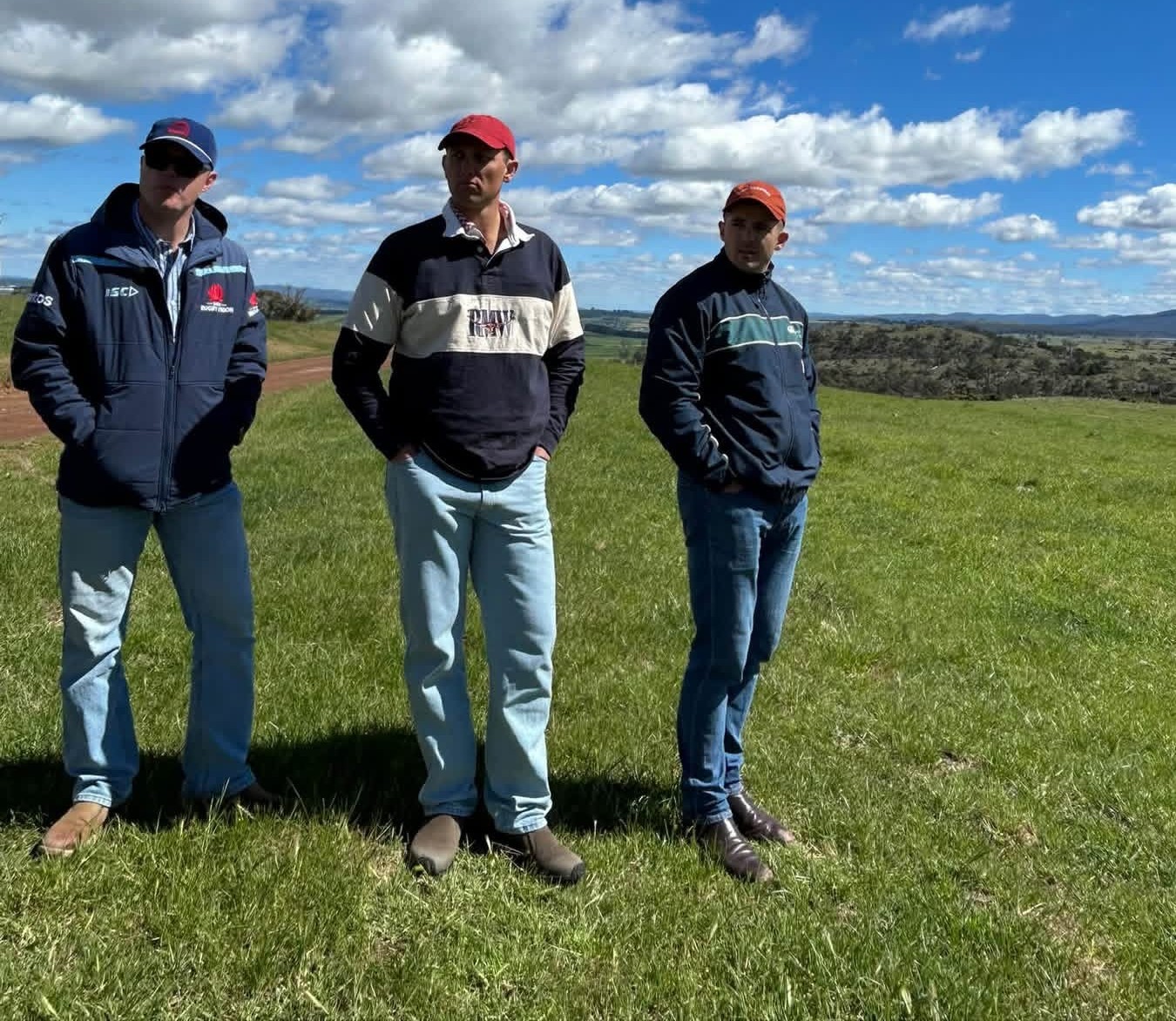
(L to R): GABC mentees Drew Walsh (NSW), Sean Wright (TAS) and Adam Bonner (QLD) during the Tassie visit
Precision feeding and seaweed
Starting at Tassal’s remote Salmon Feeding facility south of Hobart, the numbers set the tone – around 200 tonnes of feed is used each day, delivered remotely, at a feed conversion ratio near 1.1 (that’s 1kg of liveweight gain for every kilogram of feed fed).
It was hard to leave without wondering what that precision and feed efficiency could mean for the future of beef feeding.
Asparagopsis-based methane reducing feed additive manufacturer Sea Forest showed what it takes to turn a good idea into a usable product, reworking what began as a dried seaweed additive into an oil-based product that can be built into a lotfeeding supplement.
The company’s ambition to decarbonise the industry was clear, but so was their determination to get it right, with trials also demonstrating productivity gains so the product adds value for producers as well as the environment.
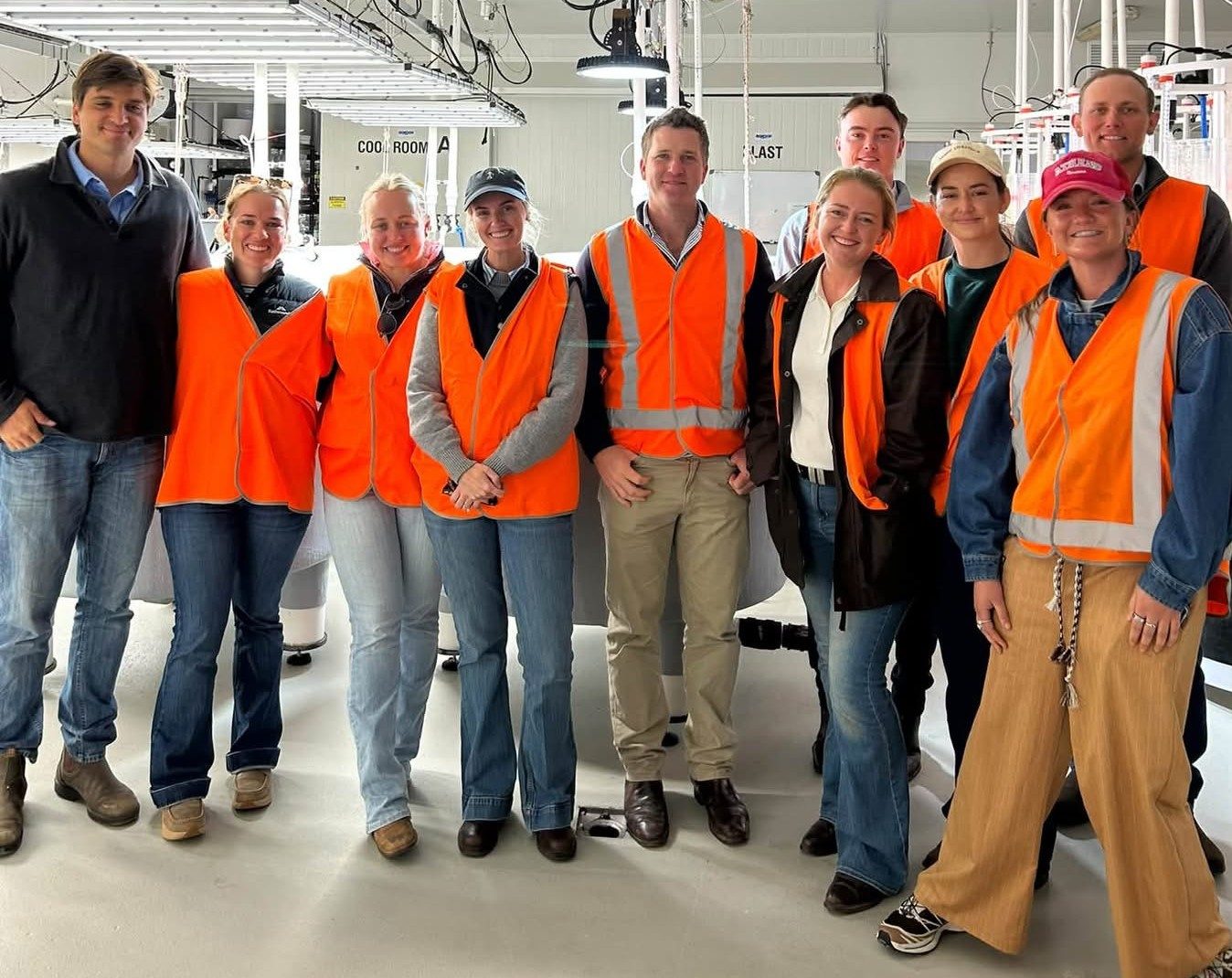
The Group at Sea Forest, hosted by Jock White and Will King of Sea Forest.
Beef on dairy at scale
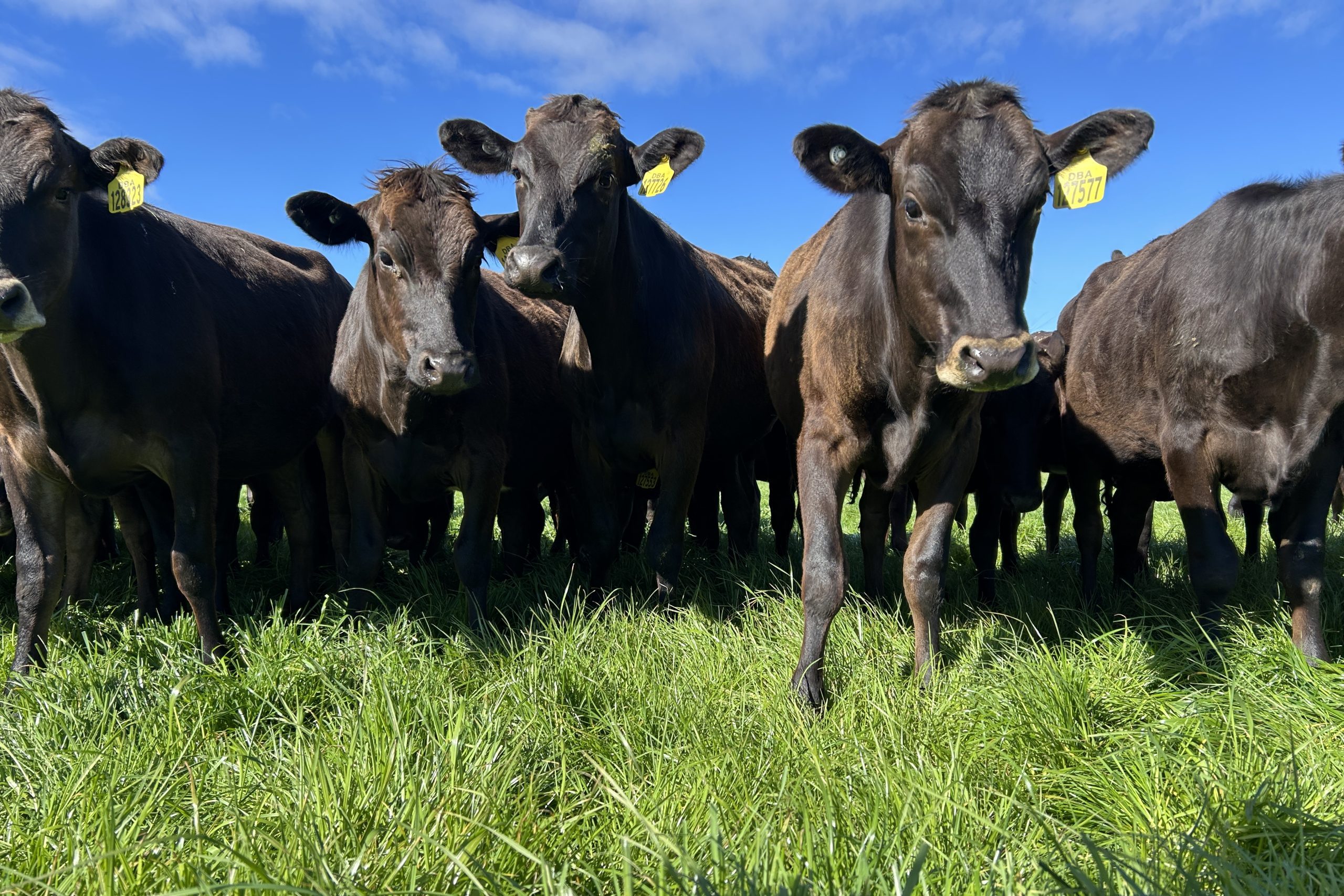
Then came the theme that followed us across the island state: dairy beef.
Sean, who works in beef-on-dairy, said the trip confirmed what he already knew: it works.
 Specifically, we learnt that it works at scale and in a vertically-integrated business – the gold standard showcased by 40 South Dairies.
Without both, it’s too risky in a market that doesn’t (yet) have a strong appetite for dairy beef. Tasmania has the dairy numbers to make it work, and Greenham is backing the idea with its dairy beef program.
The standard on show was hard to argue with. It was also hard to match.
“If you have a significant amount of capital there’s one answer, and that’s how you do it,” Sean said. “If you are hamstrung within your own business, it creates an awful lot of challenges to get to that top percent, because it is such a capital-heavy scenario.”
Sean said the challenge for the industry was building a supply chain that brings the pieces together without millions of dollars.
Diversity as risk management
At Sisters Creek, Michael Nicholls farms potatoes, wheat, onions, poppies, canola, corn, barley and mustard alongside cattle, which he sheds over winter.
Sean said risk is why small Tasmanian farms diversify.
“Not everyone is a top one percent wheat grower, a top 1pc beef producer or a top 1pc dairy producer,” he said.
High-yielding country makes the model viable, he said, with 10 hectares of one crop yielding 12 tonnes a hectare, or 50 hectares of beef carrying 200 head.
“You don’t need a lot of acres to win anymore.”
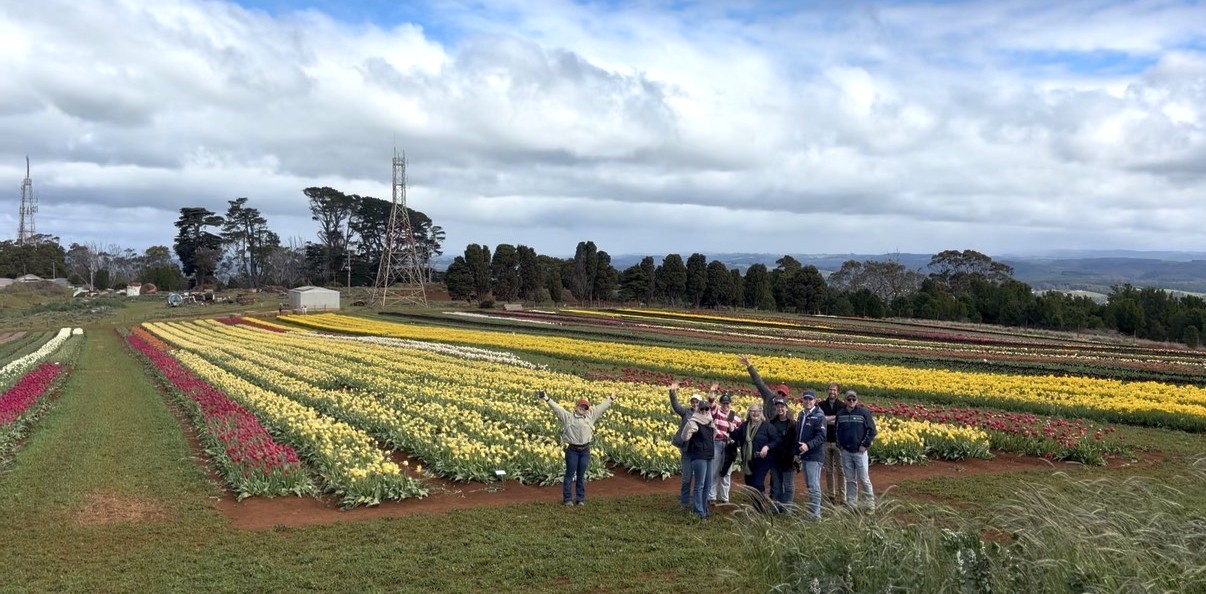
Tulips at Table Cape, with bulbs and tourism in the mix, showed how much opportunity Tasmanians can get out of a small area.
Pasture utilisation a fine art
Pasture utilisation was honed to a fine art by many of the Tasmanian producers we visited, including Landfall Angus and Western Plains Beef.
Tight rotations, planned rest periods and a close eye on cost of production and labour efficiency were the norm. Add plenty of irrigation, and it was a whole new ball-game for our group – more used to managing around dry seasons.
When water is a lever you can pull and not a roll of the dice, management is what separates the good operators from the great ones.
Technology has a place, but not a magic one. Virtual fencing offered better compliance than temporary wire, though it needs regular adjustment as cattle grow and only pays where pasture utilisation isn’t already maximised.
Succession seen as a business process
Among the producers we visited, succession was treated as a business process, not a conversation put off until it was urgent, with the right professionals in the room to guide it.
It’s a reminder that the best pasture system in the country is only as good as the next generation’s ability to take it on.
Landfall Angus’s Frank Archer put the same emphasis on the people already in the business, who he sees as integral and says must be nurtured and given real responsibility.
It reflected a theme across the tour: operations work best when the people in them have skin in the game. Productivity builds the business, but the team keeps it running and succession keeps it in the family.
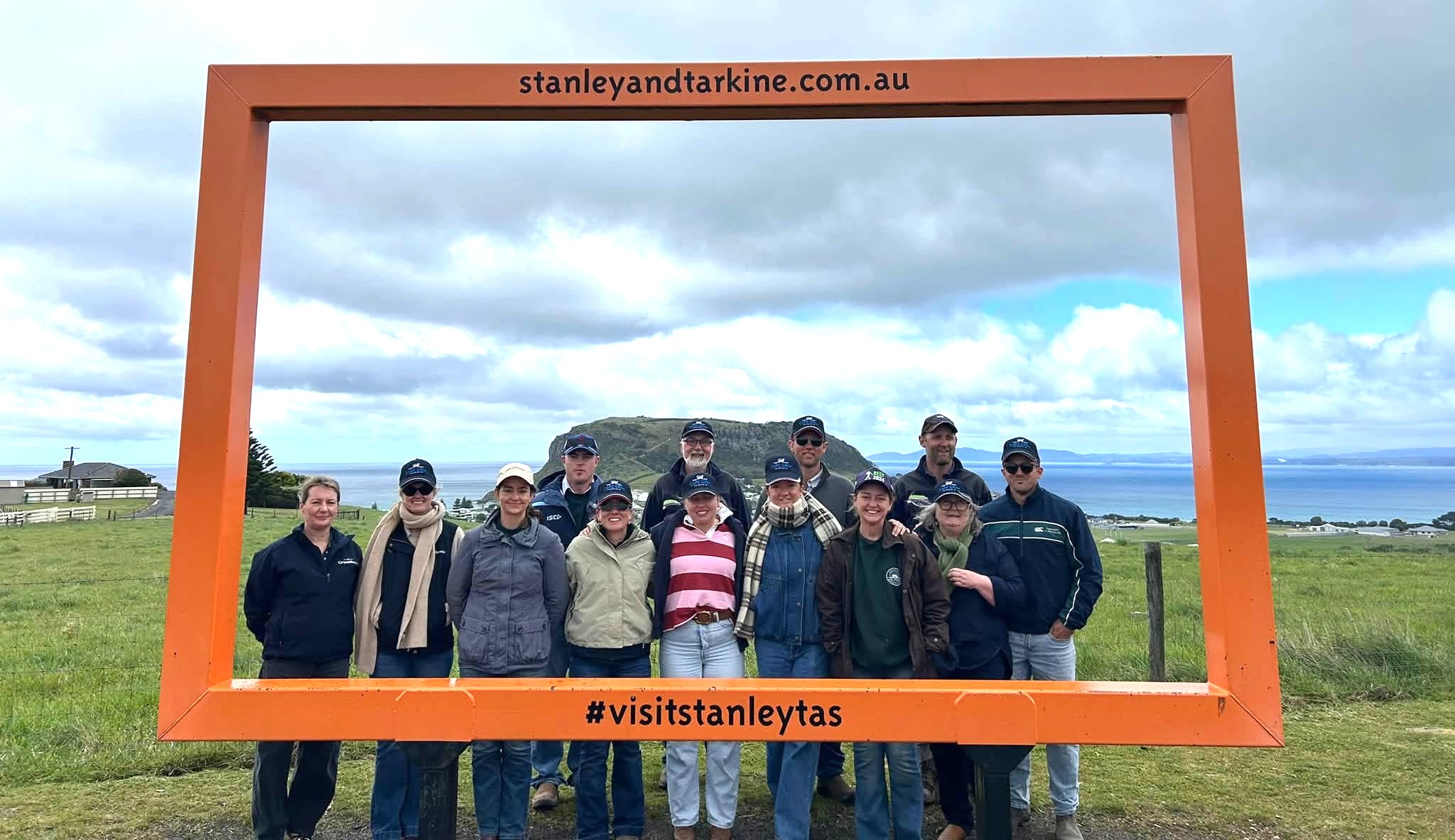
The Group at Stanley in Tasmania’s northwest, with John and Iain Bruce of Western Plains Beef, facilitated by Greenhams
The value of the room
Sean Wright said the group itself was as valuable as the farm visits, echoing what many of us felt when we first came together in Brisbane at the start of the program earlier this year. “You learn so much more from the people you’re with than just being out in the paddock,” he said.
A big thanks goes out to our amazing facilitator Jo Eady, and Beef Australia, who made the whole Tassie trip possible.
Sean said programs like Beef Connections matter beyond the individuals who attend. “We need to stop having the mindset of it’s my farm, it’s my destiny. It’s our industry.”
Sean moved to Tasmania to be closer to his partner and said he still misses parts of the northern beef industry. “It’s not that I’m missing out on something. It’s a new opportunity, and that’s the only way to look at it,” he said.
Agtech Survey details
Readers are encouraged to participate in Milly’s national beef producer agtech survey, being conducted as part of her Beef Connections research project. The survey seeks answers to the question: Why do beef producers adopt – or reject – agtech? The survey is the centrepiece of her project titled Is Agtech Worth It? How Values Define Value.
It takes around five minutes to complete and asks producers about their enterprise, their decision-making, their experience with technology, and the values that matter most to their business. Producers can complete the survey here. Please share it with your neighbours.
Millie looks forward to sharing her findings at Beef2027, with industry stakeholders, agtech developers and producers themselves.
Earlier articles in Millie’s monthly series:
October: Graeme Acton Beef Connections alumni: Where are they now?
September: Graeme Acton Beef Connections project national producer survey asks: Is agtech worth it?
August: What the Beef Connections program is teaching me about legacy
July: Is negotiation a word you use, or a life you live?
June: Graeme Acton Beef Connections member’s journey towards Beef 2027