By Brise Tencer (Organic Farming Research Foundation) and Ben Bowell (Oregon Tilth)
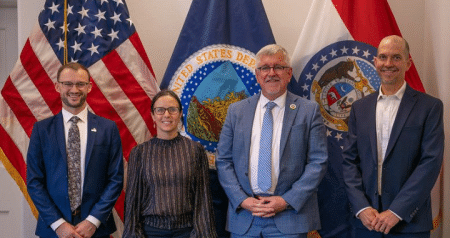
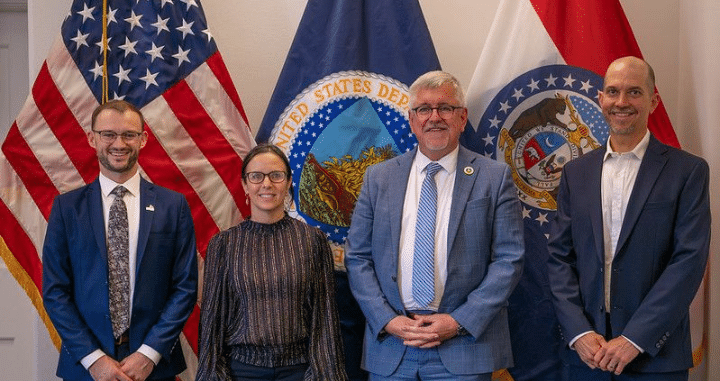
On September 16, we sat down with USDA Under Secretary for Farm Production and Conservation Richard Fordyce. We came with one message: organic farmers need a conservation agency that supports them, and key programs and funding they rely on at the Natural Resources Conservation Service (NRCS) are being lost as programs are reorganized.
We’re grateful for the Under Secretary’s time and willingness to listen. But organic and transitioning-to-organic producers deserve more than a hearing. They deserve programs built with their farms in mind.
Organic Is a Conservation Opportunity
Organic is one of agriculture’s great growth stories. U.S. organic sales hit a record $76.6 billion in 2025. Yet domestic supply isn’t keeping pace with demand, which means more of that money leaves rural America than it should. Helping farmers start and stay in organic production is a direct investment in rural economies.
It’s also a natural fit for NRCS’s mission. Organic farmers already rely on the practices NRCS champions: conservation buffers, crop rotations, cover crops, rotational grazing, and on-farm biodiversity. And because organic is defined by USDA-regulated standards, those practices are already built into organic systems.
Those standards advance the same four soil health principles NRCS promotes: keep the soil covered, minimize disturbance, maximize living roots, and maximize biodiversity. Few groups of farmers are better positioned to deliver on the agency’s conservation goals.
What’s Changed: Direct Organic Support is Disappearing
Over the past several years, NRCS built a set of tools that finally made its programs work for organic farms. Recently, the agency has ended nearly all of them:
- The Organic Management Conservation Practice Standard (CPS 823). This interim standard gave field staff a way to plan and fund conservation in organic systems. It was especially important for farmers in the difficult transition years, when income is often foregone.
- The Environmental Quality Incentives Program (EQIP) Organic Initiative. A dedicated funding pool within EQIP that helped organic farmers compete for contracts.
- The Organic Transition Initiative. Targeted support for farmers making the multi-year shift to certified organic.
- The organic set-aside in the Conservation Stewardship Program (CSP). Funding reserved for organic operations ready to take conservation further.
NRCS has also stopped tracking organic producers in its contract management system, which included data on the number of contracts awarded to organic and transitioning-to-organic farms in each state, total acreage under these contracts, and contract funding amounts. Without that data, no one can measure whether the agency is serving organic farmers at all.
We understand USDA’s goal of streamlining initiatives and its commitment to locally led conservation. But organic production happens at a national scale, and organic farmers consistently tell us they struggle when working with field staff who aren’t familiar with their systems. Without national tools and dedicated funding, those gaps will only grow.
What We Asked USDA To Do
Our requests fall into three areas: measure, build capacity, and restore targeted support.
Count organic farmers again. NRCS should resume tracking organic producers in ProTracts and in the new contract tracking system it is developing for all programs. You can’t serve a group you can’t see.
Build lasting organic expertise. We asked for a long-term capacity plan that includes:
- Consistent training for all field staff on organic regulations and production practices, drawing on the strong organic resources NRCS already has.
- Hiring professionals with organic experience.
- Long-term partnerships with organic experts to train staff and support farmers directly.
- Two permanent organic positions on the agency’s science and technology team.
- A national organic outreach plan to help states promote NRCS programs to organic farmers.
Restore support that works. Specifically, we urged NRCS to:
- Let producers identify as certified organic in EQIP without receiving a reduced payment.
- Reinstate dedicated national funding pools for organic producers.
- Work with state offices to replace CPS 823 with a workable national alternative.
- Make organic producers explicitly eligible for the new Regenerative Pilot Program (RPP), set aside a portion of its funding for them, incorporate the Conservation Plan Supporting Organic Transition (CEMA 138), and let an Organic System Plan (OSP) count toward RPP’s whole-farm planning requirement.
Where We Go From Here
Organic farmers are already doing the work NRCS exists to support. The question is whether the agency will meet them halfway. That means designing programs with organic practices in mind, training staff to understand organic systems, and tracking whether organic farmers are actually being served.
We’ll keep working with USDA to make that happen. In the meantime, we want to hear from you. If you’re an organic or transitioning-to-organic farmer, tell us about your recent experiences with NRCS, good or bad. Your stories help make the case for programs that work for every farm.