

Exciting Opportunities on AgJobs Central
Latest Listings on Our Recruitment Page:
- Maintenance Manager, Broome, WA (Kimberley Meat Company)
- Territory Sales Manager, WA (Rimfire client)
- General Manager – Operations (Rimfire client)
- Breed Secretariat Team Lead, ABRI (Pinnacle People Solutions)
- Breed Registrar, ABRI (Pinnacle People Solutions)
- Livestock Manager – Wallumba Feedlot, Qld (MDH)
- Branch Manager – Moura & Theodore, Qld (Elders)
- Regional Extension Officer – CRDC (Rimfire)
- Chief Executive Officer – Honestly Riverina Ltd (Rimfire)
- Assistant Station Manager – Charters Towers, Qld (Camm Agriculture)
- Chief Executive Officer – AMS (Rimfire Resources client)
- General Manager Livestock (Rimfire Resources client)
- Stockperson – Capella, Qld (HP Co)
- National Procurement Manager (AgriTalent client)
- Farm Hand – Sheep, Cattle & Cropping – Mudgee, NSW (DroverAg client)
- Senior Station Hand Progressive Mixed Operation – NSW (DroverAg client)
- Senior Farm Hand – Cattle & Cropping – Tintinara, SA (DroverAg client)
- Livestock & Broadacre Cropping Manager – Kangaringa Station, SA (DroverAg client)
Click here to access these and other exciting meat and livestock supply chain positions currently listed on AgJobs Central.
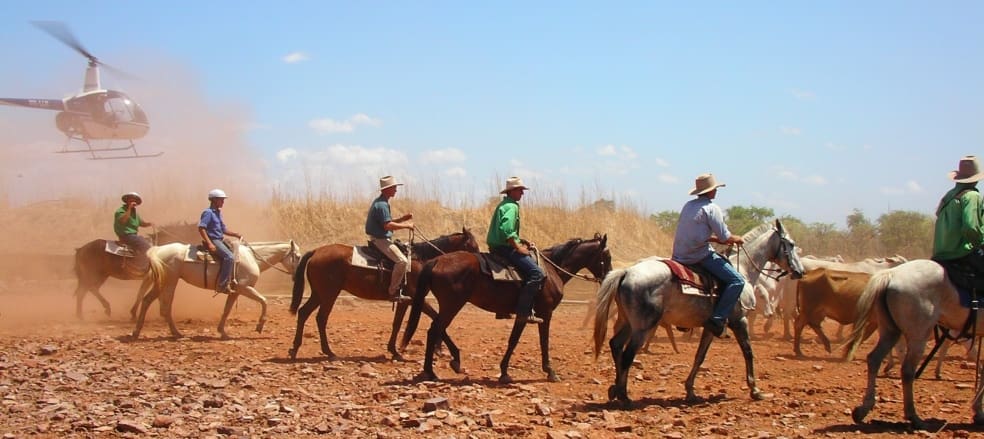
Workplace Safety in the Heat: A Guide for Employers
As summer is upon us, managing risks associated with heat in the workplace becomes crucial. Safe Work Australia has released a guide that can serve as an invaluable resource for employers in the meat and livestock industries to onboard new recruits and support existing staff.
The guide details effective strategies for handling heat-related risks and proposes actions to take if a worker shows signs of a heat-related illness.
Managing Heat Risks
The guide outlines four essential actions to protect workers from the dangers of high temperatures:
1. Identify the Hazard
Heat can be a significant hazard in Australian workplaces, affecting both indoor and outdoor environments. Factors to assess include air temperature, airflow, humidity, and the specific work activities being conducted. Engaging workers and reviewing previous incidents can help identify heat hazards more effectively.
2. Assess the Risk
A comprehensive risk assessment is vital for understanding:
- The severity of the risk.
- The effectiveness of existing control measures.
- Necessary actions to mitigate the risk.
- Urgency in addressing the risks.
Consideration must be given to where the work is performed and the physical demands on workers, as these factors significantly influence heat-related risks.
3. Control the Risk
Employers are mandated to eliminate or minimize heat-related risks as much as feasible. Possible solutions include:
- Substituting the hazard with a safer alternative.
- Isolating workers from the hazard.
- Implementing engineering controls.
4. Review Control Measures
Regularly reviewing heat management practices ensures their effectiveness and uncovers any new risks introduced by these measures. Engaging with staff during this reviewing process can enhance compliance and efficacy.
Additional Resources for Heat Management
For a deeper understanding of how to manage workplace heat risks, please refer to the Code of Practice: How to Manage Work Health and Safety Risks. Furthermore, Queensland’s Heat Stress Basic Calculator can assist in evaluating heat risks in specific situations.
About Safe Work Australia
Safe Work Australia collaborates with governmental entities to enhance workplace health and safety and compensation policies. As a national policy body, it does not enforce laws but provides crucial guidance for various jurisdictions.
This revised article presents the same content in a structured format suitable for WordPress, using appropriate HTML tags and organized sections for clarity and ease of reading.

