

By Marina Santos. Marina was OFRF’s Policy & Communication Intern in the summer of 2025. For a research project, Marina dove into understanding the impact of federal funding freezes on school lunch programs. Marina said “As a person who grew up on free & reduced lunches, I was saddened to hear the news [of the funding freezes].” In this blog, Marina explores the landscape of school lunch and local food procurement programs, and their impacts on farmers and the communities they feed.
 Since the beginning of 2025, the federal government has been experiencing internal changes. As you’re probably aware, a government agency previously known as the U.S Digital Service (USDS) was rebranded to the Department of Government Efficiency (DOGE). Part of this rebranding effort came with a new mission, to find financial inefficiencies in the government process in order to slim spending. With a new administration came new priorities, including ending programs and closing field offices across the United States. In early March, Politico announced that the USDA would lose billions of dollars in federal funding due to “inefficiencies” found in the agency. Two of the programs that lost funding were focused on providing food for children and people in need. They are:
All 50 states plus 4 of the U.S. territories participate in these programs. Both LFS and LFPA provide a boost in the local economy by nourishing the local food system. They provide buying power to nonprofit organizations and introduce a new income source to farmers. Both programs directly benefit local and regional producers, especially those that are beginning, socially disadvantaged, or veteran farmers who may need a leg up to access these larger institutional markets.
These programs, as well as others focusing on strengthening rural communities, received increased funding amounts during 2021’s American Rescue Plan Act, a Biden administration plan, in hopes of boosting the American economy during the COVID pandemic. The pandemic highlighted the cracks in America’s food system infrastructure and the American Rescue Plan Act was Biden’s attempt to fix the issue. In 2024 Biden released another $1.7 billion investment to these programs to continue supporting farmers, schools and other food nutrition programs that were still recovering from the pandemic. Shortly after President Trump took office, news broke that LFS and LFPA contracts would not be fulfilled. Many farmers who had already started their planting season were pushed into a panic with the sudden realization they would have to reconsider their entire operating plan without the help of these federal programs.
The Impact of Funding Cuts on Farms
 Oaks and Sprouts, in Ohio, is one of those farms that had a contract worth up to $25,000 that was suddenly gone due to the cancellation of the LFS and FLPA programs. This farm has been participating in LFPA for the last three years and they were in the middle of planting when they initially heard the news. LFPA contracts helped fund 2 out of their 4 seasonal employees as well as provided the farm the means to diversify their crops. Oaks and Sprouts were supplying fresh local produce to two food pantries, and had to make a quick pivot to revert back to their previous practices of selling only to restaurants and farmer’s markets.
In the heartland of Nebraska, West End Farms is also dealing with the damages from loss of federal funding. The owner of West End Farms learned about the cuts through their local newspaper. Sudden program cuts limit the access of fresh local foods to a community. Farmers want to feed their communities, and these federal programs have been a way to support them in doing so.
Funding Cuts Hurt The Community
These cuts do not only affect the farmers who were relying on signed contracts for their crop planning and cash flow–states are also scrambling to adjust to the cuts for the upcoming school year. According to the Food Research and Action Center, over 28 million children received school lunches, with nearly 20 million receiving free or reduced lunch from 2022-2023. Minnesota was previously awarded roughly $13.3 million in funding, which allowed schools to purchase and distribute local, fresh foods for their students. The awarded money would also go towards the state’s initiative to provide free meals for all their students, nearly 150 million meals would have been provided between breakfast and lunch.
Food Banks, which generally also receive State support, are also feeling the heavy impact of lost funding. Approximately 50 million people rely on food banks and nutrition assistance programs each year. For example, the El Paso food bank provided over 88.5 million meals to low-income families in Texas. Due to the program cuts they are forced to limit their operations, resulting in 20% of their mobile pantries no longer receiving food. The effects of these program cuts have been seen and felt immediately.
So What Now?
Amidst all the bad news there are some highlights. Many state run groups have taken up the mantle in hopes to reestablish the connections between schools and farms. For instance, Maine’s Local Food Processing Infrastructure Workgroup has created a program called Local Food Switchboard which is designed to help connect local food producers and processors to schools in need.
The National Farm to School Network, an organization whose mission is to connect farms to local schools, will maintain their Local Food Purchasing Incentive for states. This program helps fund schools to purchase food from local producers.
Another ray of hope is that not every program cut is permanent. Some programs have seen their funding “unfreeze.” Local Food Promotion Program and Local Agriculture Market Program (LAMP) were both programs that were part of the March cuts and were then reinstated a couple months later. Both these programs are designed to help create and support local agriculture markets.
It is critical that we continue to let our policymakers know the importance of these programs for supporting farmers and feeding our communities. The most effective way to ensure that LFS and LFPA receive their funding is by contacting your local legislators to ask that they support the Local Farmers Feeding our Communities Act, a bipartisan bill that would reestablish these programs. For advice and help on how to reach out to your policymakers, check out OFRF’s free, self-paced, online Communicating With Legislators Email Course.
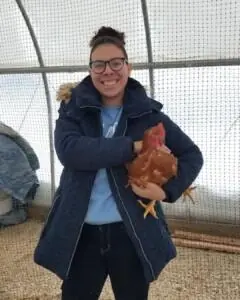
Marina Santos, OFRF Policy & Communications Intern