

Key Takeaways:
- Meat and poultry plants change the rules of digitization: Factors like temperature variations, moisture levels, and sanitation requirements determine the practicality and installation of technology.
- Many digital initiatives stumble: These challenges often arise not from poor ideas, but from ignoring washdown realities, connectivity gaps, and hygienic design requirements from the start.
- Leading processors phase transformation: They begin with resilient data capture and food safety visibility, then expand into optimization and automation once the foundation proves reliable.
The journey of digital transformation in food manufacturing is now common knowledge—connecting equipment, collecting data, building dashboards, applying analytics, and automating processes. However, in meat and poultry processing, the path to this destination is nuanced.
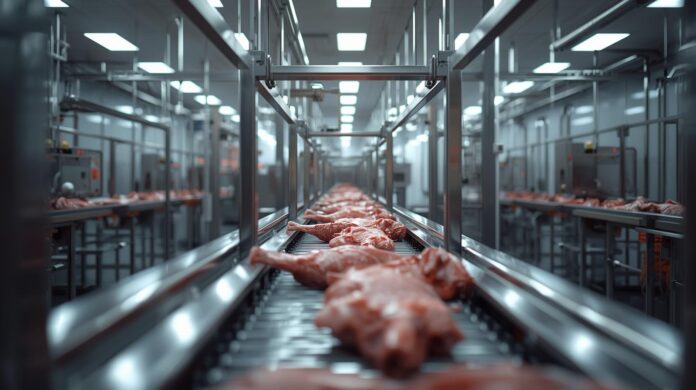
The complexities don’t stem from a lack of ambition or capability. Instead, they arise from operating conditions that are frequently more demanding than in other manufacturing sectors. Meat processing facilities contend with regular washdowns, cold rooms, condensation, chemical exposure, and an unwavering focus on sanitation. These factors necessitate that technological solutions are chosen carefully to ensure they can withstand the unique challenges of this environment.
Let’s examine how leadership teams can plan an Industry 4.0 digital transformation that aligns with the realities of meat and poultry operations.
Plant Conditions Change the Rules of Digitization
While digitization in many industries might kick off with a simple off-the-shelf sensor and a wireless network, meat and poultry plants face unique challenges:
- Temperature and Humidity: These factors can lead to condensation on enclosures, cables, and connectors.
- Sanitation Cycles: High-pressure water, chemical exposure, and foaming are introduced during clean-up.
- Hygienic Design Expectations: These shape the mounting options and the cleaning processes.
- Downtime Tolerance: The cost of line interruptions is high, making reliability crucial.
Although these challenges do not render digital transformation impossible, they demand that reliability and hygienic installation practices be integrated from the outset rather than as an afterward consideration.
Understanding the Complexities of Meat Processing
Harsh Environments
The combination of washdown zones and cold storage can severely impact electronic equipment. Issues such as water ingress, corrosion, and cable deterioration can complicate even simple data-collection initiatives.
This presents a significant challenge for automation and digital systems in meat processing, as both variability of products and strenuous environmental conditions become barriers. As noted in research, addressing these challenges is crucial.
Leader-Level Implication: The business case for digitization should include the cost of ensuring solutions are robust (e.g., considerations for enclosures, connectors, and spare parts strategies).
Sanitation Constraints
In meat and poultry operations, equipment installation goes beyond engineering—it’s also a matter of hygiene and food safety.
Common Friction Points Include:
- Cleanability: Difficult-to-clean devices can become irrelevant, regardless of their data value.
- Cleaning Methods: Clean-in-place (CIP) and clean-out-of-place (COP) methods dictate what can be instrumented and the frequency of servicing.
Research highlights that manufacturers are evolving their sanitation practices, focusing on hygienic machine design and digital-ready features.
Leader-Level Implication: Sanitation should be considered a co-design partner in digital projects, not merely a sign-off step.
Line Speed and Uptime Pressure
Even the best digital tools have limitations if they require:
- Frequent recalibration
- Complex login processes
- Fragile devices that may malfunction during operations
- Frequent troubleshooting of basic connectivity issues
In meat and poultry operations, maintaining a steady rhythm is essential. Technology needs to be compatible with operational demands, particularly when balancing labor constraints and production targets.
Leader-Level Implication: Opt for solutions that can be easily maintained by plant teams, minimizing special handling and providing straightforward troubleshooting procedures.
Compliance and Audit Readiness
Meat and poultry processors operate under USDA regulations and typically adhere to HACCP standards. The intersection of digitization and compliance manifests in several key areas:
- Record Integrity: Data must be attributable, legible, and secure from accidental modifications.
- Calibration and Verification: Sensors aiding food safety decisions must be reliable and properly calibrated.
- Traceability: Data should correlate with lots, rework, and specific processing conditions.
Leader-Level Implication: “Collecting data” does not equate to “creating trustworthy records.” Governance is paramount, especially for food safety and traceability issues.
Common Challenges in Meat and Poultry Digital Initiatives
When digital projects falter, it’s usually due to compatibility issues rather than effort. Below are several common pitfalls:
- Consumer-grade Hardware: While it may work for pilot projects, it often fails under industrial washdown conditions.
- Complex Radio Environments: Metal infrastructures can create dead zones, complicating connectivity.
- Data Capture Systems with Poor Hygiene Design: Those that compromise sanitation or create hard-to-clean areas will not be viable in meat and poultry contexts.
Best Practices from Leading Processors
Successful digital transformation in the industry often follows certain principles:
- Utilization of Ruggedized, Hygienic Equipment: Select appropriate devices and install them to facilitate easy sanitation.
- Edge-First Data Capture: Collect and buffer data near production lines, enhancing system resilience against connectivity failures.
- Standardized Training and Workflow: Incorporate job aids and training that reflect the fast-paced nature of meat and poultry production.
- Governance for Data Integrity: Ensure clarity on user roles, audit trails, and data definitions to support traceability.
Exploring Innovation Opportunities
Digital transformation also extends into operational handoffs and validation protocols that align with food safety.
Creating Effective Validation Protocols
Validation is especially important when technology impacts food safety, requiring repeatable protocols that clarify:
- What constitutes valid data in a particular zone
- How equipment is cleaned and inspected
- Verification methods for maintaining accuracy over time
- Contingency plans for mid-shift device failures
Streamlined Scaling Processes
Scaling efforts often falter when pilot projects overlook:
- Zone-specific variations across different plants
- Shifts in sanitation protocols due to new products
- Variabilities in line speed, layout, and staffing needs
A reliable scaling path may involve:
- Reference architectures
- Approved devices tailored for each zone
- Installation standards for equipment
- Consistent training and support models
Enhancing Cross-Functional Communications
New product launches often introduce new data requirements, necessitating clear communication between different teams.
- Identification of critical control points
- New allergen and sanitation risks
- Alterations to yield sensitivities
Specifying these handoffs enhances both innovation and operational stability.
If you are embarking on or reassessing your digital transformation strategy in the coming quarter, consider the following checklist:
- Identify Priority Outcomes: Focus on critical aspects like record consistency or downtime tracking.
- Map the Facility by Hygiene Zones: Specify which hardware is suitable for each environment.
- Create Installation Standards: Outline mounting, cable routing, and cleaning expectations.
- Select Ruggedized Devices: Ensure compatibility with designated zones.
- Establish Hygienic Infrastructure for Connectivity: Plan where signals might drop and ensure safe power supply methods.
- Decide on Data Capture Locations: Assess whether data collection is most effective locally or centrally.
- Define Trustworthy Data Requirements: Include elements like calibration and audit trails.
- Integrate Standard Work: Ensure clear responsibilities for failures and conflict resolution.
- Prepare for Shift Daily Realities: Design multilingual training and incorporate brief modules.
- Establish a Support Loop: Designate ownership for day-to-day issues and maintenance updates.
- Track Early Wins and Challenges: Use documented evidence for future scaling decisions.
- Implement a Phase Gate: Only expand once the initial solution has proven resilient.
When planned effectively, digital transformation can bring substantial value to meat and poultry processing. The cornerstone of scalable projects is technology that aligns with the operational realities of these plants.
FAQs for Food Manufacturing Leaders
Q: How is digital transformation in meat processing different from other sectors?
A: The unique washdown procedures and stricter sanitary constraints make digitization in meat and poultry operations particularly distinctive.
Q: What’s a sensible first use case for our initial efforts?
A: Many begin with critical control point visibility within HACCP for improved food safety documentation and data foundation development.
Q: Do we need to modernize our entire network at once?
A: Not necessarily. Value can be realized by enhancing reliability in targeted areas before broader expansion.
Q: What does “edge-first” mean?
A: Edge-first refers to local data collection, which ensures resilience even in the presence of network interruptions.
Q: How can we avoid pilots that fail to scale?
A: Build zone standards early, involve sanitation in the design phase, and document operational maintenance needs.
Q: Where should governance start for traceability?
A: Begin with clear definitions of the system of record, necessary attribution, calibration tracking, and permissions.
This optimized HTML structure retains key content while ensuring clarity and a logical flow for readers. The formatting adheres to best practices for web readability and integration into WordPress.

