

Unraveling Trichomoniasis: Genetic Links in Calf Abortions Uncovered
Recent studies suggest that some calf abortions attributed to the cattle disease Trichomoniasis may be linked to inherited infection. Concerns about empty and dry cows harboring the disease have been raised by Dr. Matt Kelly, chief scientist at the Australian Agricultural Co.
Dr. Matt Kelly
Dr. Kelly revealed that a comprehensive three-year study testing 4,500 bulls found a significant heritability factor of 12% for the venereal disease, which spreads through infected bulls across northern Australian herds.
Understanding Trichomoniasis
Trichomoniasis, often referred to as “trich,” is a major sexually transmitted disease in cattle that leads to embryonic death shortly after conception. North Australian beef herds typically experience losses from confirmed pregnancies to weaning ranging from 5% to 15%, amounting to an estimated economic impact between $60 million and $100 million annually.
During last week’s Trop Ag conference, Dr. Kelly emphasized the need for analyzing trich disease through the lens of female carriers: “Do empty cows harbor the disease?” he queried. “We need to assess the influence of dry cows in perpetuating this epidemic.”
Genetic Insights
The study revealed strong age-related patterns in transmission rates. Young bulls, initially isolated from infected bulls, gradually increased their contact over time, leading to heightened infection rates. This raised questions about the genetic factors behind these patterns. “Why are some bulls not getting infected when they’ve been in contact with carriers?”
Dr. Kelly, a geneticist at heart, expressed enthusiasm for identifying traits that could mitigate infection rates. “If we can establish a genetic control mechanism, it could be one of many tools in our arsenal to combat trich—alongside test-and-cull and potential vaccines.”
Systematic Screening
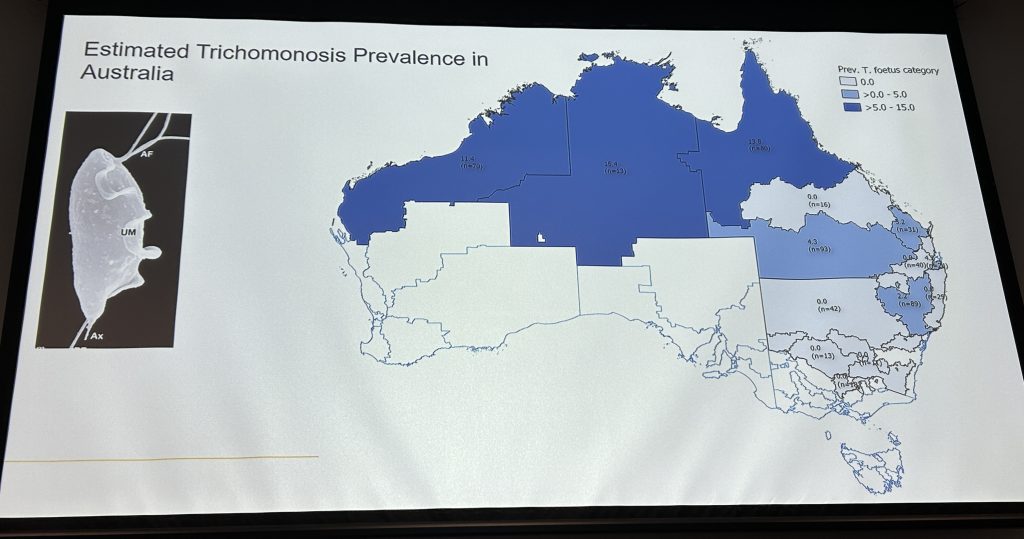
His findings stemmed from a systematic screening that unveiled infection rates as high as 30% in ten AA Co properties. “This is a potentially significant issue; trich causes abortions, and we lack effective treatment,” Dr. Kelly stated.
The initial phase of the project involved testing a subset of bulls across ten properties to assess the problem, resulting in prevalences from 30% down to zero.
Implementation of Testing
Dr. Kelly described the targeted strategy involving three properties: one low-prevalence and two high-prevalence, aiming for significant intervention. “We focused on ensuring rigorous testing and culling of positive bulls, replacing them with younger, non-infected candidates,” explained Dr. Kelly.
Despite facing logistical challenges, including exhausted testing chemicals, the trial tested about 4,500 bulls over three years. “That’s where the need for repeated testing became evident,” Dr. Kelly noted.
Promising Results
“Over time, we saw improved results in reducing prevalence on two of the properties after enhanced diligence. The third property, however, fell short due to lower participation in testing,” Dr. Kelly added.
Looking Forward
“This rigorous approach to test-and-cull can effectively lower trich prevalence, but it demands an unwavering focus on bull control and testing protocols,” he concluded, highlighting the importance of ongoing efforts.
About Bovine Trichomoniasis
Bovine Trichomoniasis is caused by the protozoan parasite Tritrichomonas foetus, primarily spread during mating. While some embryos can survive longer, the disease often leads to abortions occurring before five months of gestation.
Currently, there is no approved vaccine or treatment available in Australia. As vaccination efforts continue, culling infected bulls remains the sole viable solution.
This study on bovine trichomoniasis received support from Meat & Livestock Australia. The AA Co team collaborated with various research institutions, including the Centre for Animal Science and Queensland Alliance for Agriculture and Food Innovation, to further investigate this critical issue.
This article is structured with appropriate HTML tags and paragraphs for easy readability and seamless integration into WordPress.

