
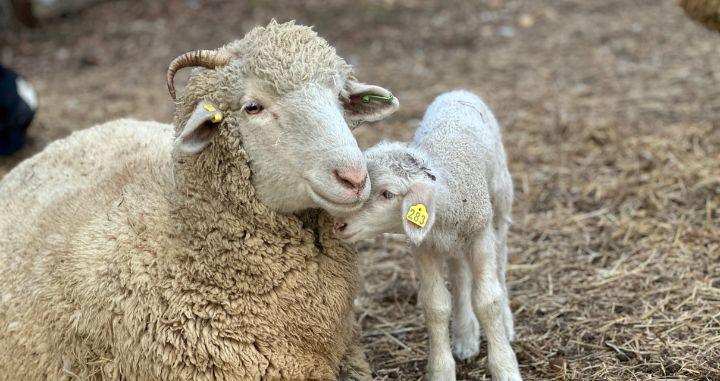
The Impact of Grazing Lespedeza Pastures on Reducing Parasitic Worm Load
Written by Mary Hathaway, OFRF’s Research & Education Program Manager, and Ed Crowley, FLT Program participant
Lambing for Mesta Meadows FLT trial began in January 2026.
Nestled in the scenic hills of the Ozarks, Mesta Meadows covers an expansive 235 acres. The ranch, managed by Ed Crowley, is dedicated to a diverse range of pasture-based livestock production, including lamb, beef, pork, and poultry, in addition to sheep dairy and fine wool harvesting. Committed to sustainable practices, Ed employs rotation grazing, fosters native grass growth, and ensures low-stress environments for all his animals. Currently, Mesta Meadows is transitioning to organic certification.
In addition to his role as a rancher, Ed teaches entrepreneurship at Southeast Missouri State University. His farm also serves as a hub for small businesses, featuring an on-farm retail store, the Atelait Creamery (which produces premium ice cream), and a nationally recognized Fiber Festival.
Utilizing Forage Species as a Natural Deworming Agent
The ranch’s location in Glenallen, Missouri, characterized by high humidity and over 60 inches of annual rainfall, contributes to lush pastures but also elevates the risk of parasitic infections, particularly barber pole worms (Haemonchus contortus). This issue has led to a concerning mortality rate among lambs post-weaning. Though chemical drenches have traditionally been utilized for management, increasing resistance to these treatments poses a growing challenge.
Seeking a natural alternative to lessen reliance on chemical treatments, Ed has explored the potential of various forage species to complement his existing pasture grasses of fescue and clover. Notably, lespedeza (Lespedeza cuneata), a warm-season perennial legume well-suited for southern climates, has demonstrated anti-parasitic effects in previous studies. Research conducted on goats in Oklahoma revealed significantly reduced fecal egg counts (FEC) in those grazing on lespedeza compared to traditional grass pastures. Ed is optimistic that integrating lespedeza into his sheep pastures will similarly diminish internal parasite loads, providing a cost-effective and natural deworming solution.

