

Groundbreaking Study Unveils Genetic Insights into Northern Beef Cattle Gestation
A pioneering study examining the gestation length of northern beef cattle has made significant revelations regarding the trait’s genetic basis. Conducted by leading Australian beef geneticists, this research revealed that gestation length exhibits a remarkable heritability, with minimal environmental influences.
The analysis, which involved data from three prominent tropical breeds, demonstrated a direct heritability of 79 percent for gestation length, indicating a strong genetic component driving this trait. Notably, factors such as breed, calf sex, and cohort were found to have considerable impacts on gestation duration.
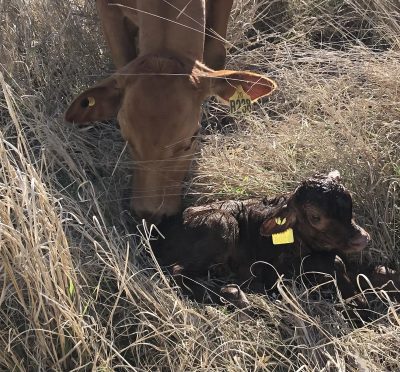
Cow and calf at the time of recording calf date of birth.
The study uncovered a notable variance of 6.4 days in gestation lengths across the three studied breeds. The averages recorded were 291.5 days for Brahman, 288.2 days for Droughtmaster, and 285.1 days for Santa Gertrudis. These figures reflect the longer gestation periods observed in tropical breeds compared to their temperate counterparts, which generally have an average of 282 days.
Further analysis indicated that male calves experienced longer gestation periods, with Brahman, Santa Gertrudis, and Droughtmaster breeds showing respective differences of 3.1, 2.4, and 1.9 days compared to female calves.

Dr Kirsty Moore
Research leader Dr. Kirsty Moore, a senior research scientist at the Animal Genetics and Breeding Unit (AGBU) in Armidale, emphasized the significance of these findings: “This research demonstrates that selecting for reduced gestation length will indirectly reduce birth weight, without impacting weaning weight.”
According to the research report, published in CSIRO’s journal Animal Production Science, no genotype by environment interactions were detected for the traits assessed. Dr. Moore noted, “Animals across both study locations maintained consistent genetic rankings for the traits evaluated.”
The study analyzed calves born from 2014 to 2022 across two herds, resulting in a total of 2,346 records for gestation length and comprehensive data for birth and weaning weights. The offspring in this extensive dataset were progeny of 245 sires, with an average half-sibling family size of 29, enabling robust estimation of genetic parameters.

Dr. Moore highlighted the critical nature of gestation length in beef cattle due to its association with calf birth weight and dystocia (birthing difficulties). “Our research provides the first genetic parameters for gestation length in Australian tropical breeds and examines the genetic relationships with both birth and weaning weights,” she added. The research indicates that shorter gestation lengths can also lead to reduced birth weights without affecting weaning weights.
This study also found a significant relationship between gestation length and birth weight, emphasizing that the genetic factors affecting these traits differ from those impacting an animal’s growth post-weaning. Gestation length is meticulously recorded as the interval between artificial insemination (AI) and the birth of the calf.
The gestation length Estimated Breeding Values (EBVs) serve as a crucial genetic assessment tool, with BreedPlan evaluations for the involved breeds now including this important trait.
Remarkably, the study revealed a considerable variation in gestation length sire EBVs, with differences of 19.1, 21.7, and 16 days identified for Brahman, Droughtmaster, and Santa Gertrudis sires, respectively. Dr. Moore stated, “The high heritability and substantial spread in sire EBVs suggest that genetic selection for gestation length is very promising.” Breeders can now utilize BreedPlan gestation length EBVs to identify sires with desirable genetics for shorter gestation periods.
This groundbreaking research was part of the Repronomics project, a significant breeding initiative spanning Queensland and the Northern Territory aimed at enhancing the genetic evaluation of female reproductive traits. Funded by Meat & Livestock Australia and Queensland DPI, it aims to establish a reference population for implementing genomic selection techniques for tropical beef breeds.

