Innovative Research at North-West University Tackles Food Security via Sustainable Poultry Feed
The North-West University (NWU) is making significant strides in addressing sustainability and food security challenges across southern Africa. This year, Melokuhle Queeneth Magagula, a notable MSc graduate in Animal Science from the Faculty of Natural and Agricultural Sciences, has garnered both national and international attention for her groundbreaking research on sustainable poultry feed development.
Commitment to Rural Development and Environmental Stewardship
Under the supervision of Dr. DMN Mthiyane, Melokuhle’s research underscores NWU’s dedication to advancing science that supports rural development, environmental stewardship, and the principles of the circular bioeconomy.
Turning Indigenous Resources into Sustainable Feed
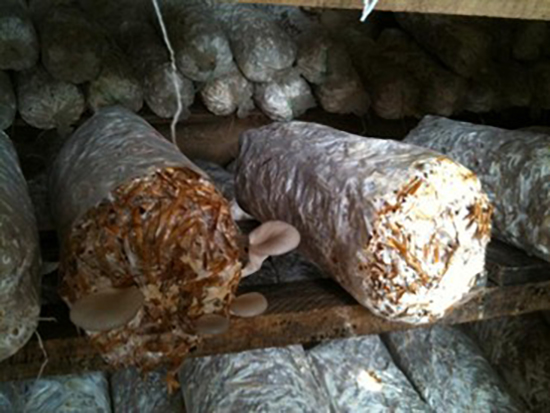
Her research focused on valorising Vachellia erioloba pods—fruits from an indigenous mokala tree species prevalent in North West Province and across other regions of the Southern African Development Community (SADC). Through innovative solid-state fermentation using oyster mushrooms, she investigated the potential of these pods as an alternative feed resource for indigenous Boschveld chickens.
Scientific Experiment and Methodology
Melokuhle’s study evaluated the impacts of incorporating Vachellia erioloba oyster mushroom spent substrate (OMSS) into the diet of Boschveld chickens. The experiment employed a completely randomized design involving 250 four-week-old mixed-gender chicks, divided into 25 pens with five treatment diets (0%, 1.25%, 2.5%, 5%, and 10% OMSS) over a 12-week feeding trial.
Key Findings and Results
The research yielded significant insights into the effects of OMSS on feed intake and poultry performance. Some notable findings include:
- No linear or quadratic effects of the diet on overall feed intake or body weight gain.
- Decreased feed conversion efficiency during specific weeks.
- Increased serum albumin and bilirubin levels in the experimental birds.
- Changes in meat characteristics, such as increased lightness, redness, and yellowness.
- Altered fatty acid composition, notably improved ratios of n-6/n-3 fatty acids.
Implications for Sustainable Poultry Nutrition
These findings demonstrate that incorporating Vachellia erioloba-derived OMSS at a 2.5% level notably enhances meat’s nutritional quality without compromising its physico-chemical properties. This research provides valuable insights for smallholder and rural poultry producers, advocating for the use of indigenous resources in sustainable agricultural practices.
A Trailblazer for Sustainable Livestock Research
Graduating with distinction, Melokuhle embodies NWU’s mission to nurture researchers advancing innovation, sustainability, and indigenous knowledge in agricultural sciences. Her findings were published in the high-impact journal, Scientific Reports, affirming NWU’s leadership in applied, impactful research that addresses Africa’s food and environmental challenges.
Reflecting on her academic journey, Melokuhle remarked, “My research was inspired by the need to find sustainable, locally sourced feed options that support both our farmers and the environment. The Vachellia erioloba pods are a natural resource that, through biotechnology, can contribute meaningfully to food security and circular agriculture in Africa.”
Melokuhle Queeneth Magagula