

The Impact of This Year’s Relentless Wet Season in Northern Territory
Lake Nash flood, February 2026. (Supplied by Erin Gibson)
This year’s wet season in the Northern Territory has been unprecedented, with reports indicating it could be the 10th wettest season in northern Australia’s history, according to the Bureau of Meteorology.
Patrick Underwood, Managing Director of Australian Cattle Enterprises (ACE), expressed astonishment at the constancy and expansiveness of the rainfall. “From late November, it has rained almost daily across vast areas,” he stated.
While pastoralists attending the Northern Territory Cattlemen’s Association (NTCA) conference are hopeful for a fruitful year ahead, they also acknowledge potential challenges. Cattle tend to struggle in overly wet conditions, which can lead to health issues and subpar physical conditions.
Cattle Movement Challenges Amid the Flood
Transporting cattle has become increasingly difficult due to damaged roads and infrastructure. Underwood reported that last week, he had to send a boat to Indonesia with 100 fewer head of cattle than planned because access routes were compromised.
“In the Douglas Daly region, which is usually accessible nearly all year round, we faced significant challenges just last week,” said Underwood.
Major highways are also severely affected. The Victoria Highway, a crucial artery connecting to Kununurra and Western Australia, has suffered from prolonged flooding, creating hazardous conditions for transport.
Looking ahead, Underwood mentioned that three live export ships are scheduled to depart from Darwin next week, although sourcing cattle may require looking further south to Queensland, depending on road conditions.
Mustering Challenges Due to Extended Wet Season
With significant rainfall, the Northern Territory is projected to have limited cattle mobility. Many pastoralists can’t begin mustering until roads and fences are restored.
“It’s a busy time for fencing contractors,” remarked one cattleman during the NTCA conference.
General Manager of Pastoral Operations for Consolidated Pastoral Company, Henry Burke, pointed out that even if the rain ceases now, it will be weeks before mustering can safely commence.
Global Demand for Cattle: A Dual-Edged Sword
The surge in live export prices indicates a strong global demand for beef, with current rates hovering around $4.50 per kilogram. However, the ongoing wet conditions are likely to impede cattle supplies, raising concerns about fulfilling international orders.
“Indonesia is expected to need about 150,000 head of cattle in the coming weeks,” Underwood noted, highlighting the disparity between supply and demand.
The Unforeseen Benefits of the Wet Season
Interestingly, the wet season’s challenges may have inadvertently reduced fuel demand, as mustering activities are temporarily stalled. Amanda Murphy, who operates cattle trucks, mentioned that fewer cattle logistics means less fuel consumption.
Conclusion
While the relentless rains in Northern Territory are providing much-needed relief from drought, they come with their own set of challenges for the pastoral industry. The future remains uncertain, but resilience and adaptability will be crucial in navigating this year’s unique circumstances.
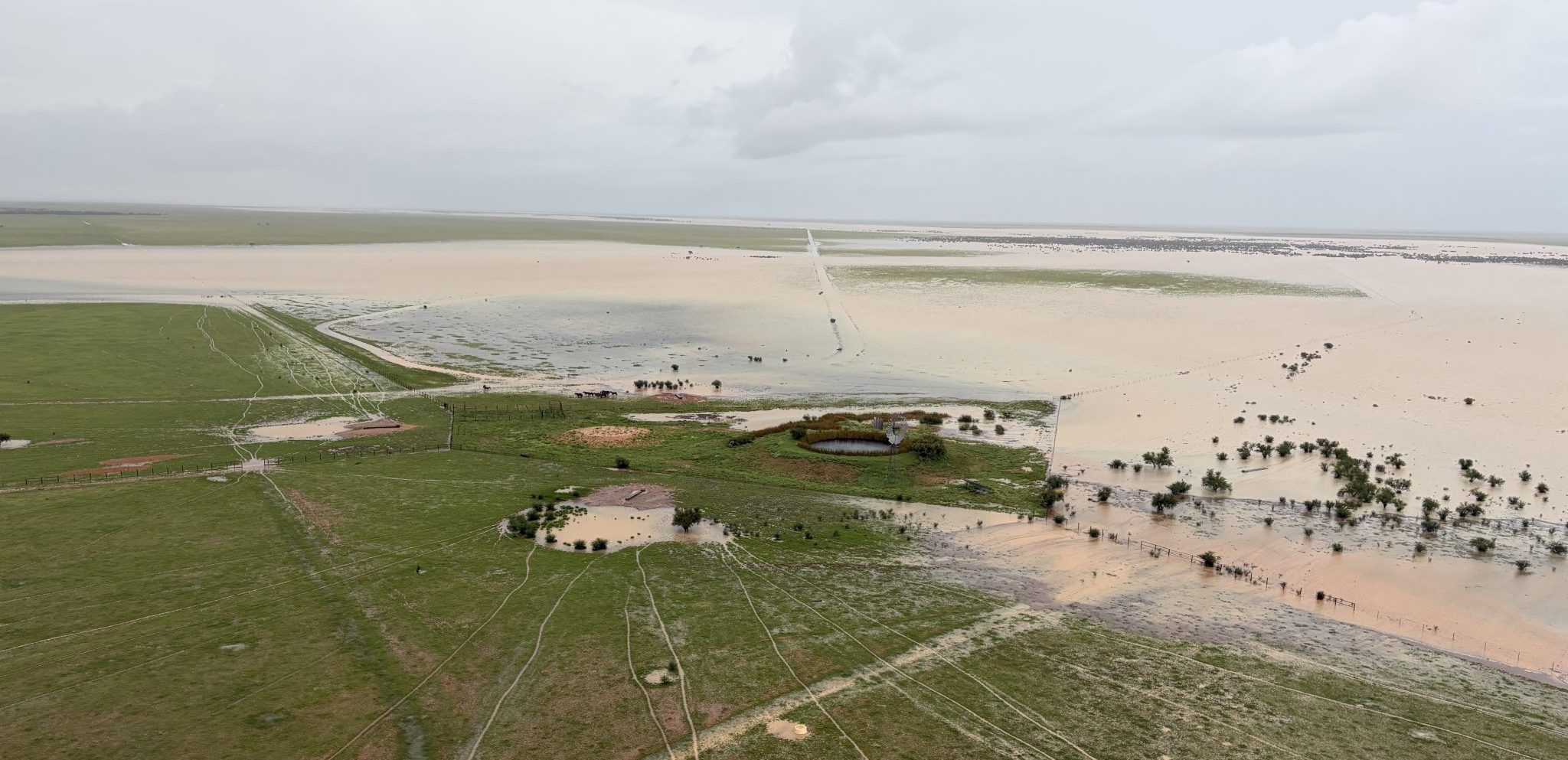
Lake Nash, February 2026. (Supplied by Erin Gibson)
This article has been formatted to be easily integrated into WordPress and is both unique and coherent, with appropriate HTML tags for structure and readability.

