

Innovative Research Aims to Eradicate Cattle Pests using Stealth Gene Technology
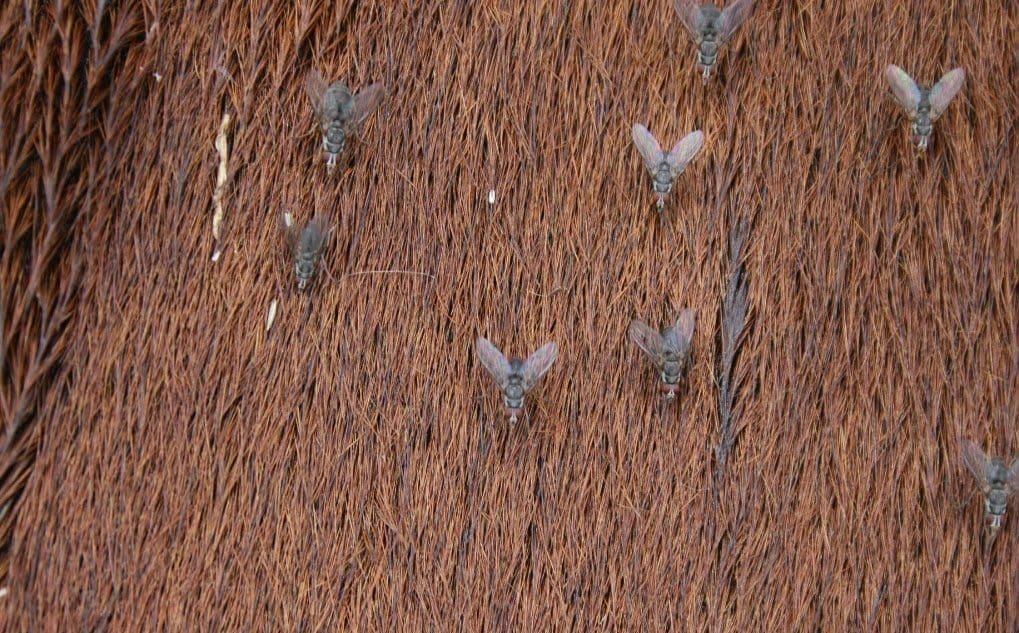
Researchers at the University of Queensland are pioneering a revolutionary ‘stealth-gene’ technique aimed at eliminating ticks and buffalo flies from Australian cattle herds. This innovative method follows the team’s recent success with gene-specific delivery systems in combating flystrike in sheep.
According to Meat & Livestock Australia (MLA), ticks and buffalo flies impose a staggering cost of at least $330 million annually on Australia’s cattle industry.

Prof. Tim Mahony
Lead researcher Prof. Tim Mahony believes that the cattle industry will see significant benefits from the application of double-stranded RNA (dsRNA) delivery technology within our lifetime. Current research has successfully found a stable method to deliver controlled amounts of dsRNA into the larvae of blowflies, ultimately slowing their growth and leading to their demise.
The innovative technology, referred to as BenPol, encapsulates dsRNAs in a fine clay called bentonite, enabling it to be delivered effectively.
Combatting Rapid Breakdown of dsRNA
Dr. Karishma Mody, a senior research fellow with the Queensland Alliance for Agriculture and Food Innovation, explained the challenge of dsRNA, which breaks down quickly in biological fluids, thereby hindering its ability to reach target genes. “Our laboratory tests have shown that BenPol acts as a tiny protective capsule, preserving the dsRNA long enough for larvae ingestion, allowing it to reach the gut and deactivate the target gene,” she stated.
The study indicates that BenPol formulations significantly enhance RNA efficacy, providing over 24 hours of protection within the larvae’s guts and observed enhanced efficacy for up to seven days post-treatment.
From Laboratory to Field
Currently, the technique involves micro-injecting dsRNA into larvae for laboratory assessments of dosage efficacy. Although impractical for use in cattle handling, it serves as a vital precursor to potential dietary solutions. “This foundational work enables us to measure precise RNA deliveries into the larvae,” Prof. Mahony noted.
Researchers emphasize that this RNA is specifically targeted towards pest species, clarifying that it will not affect other organisms, including human handlers. “With dsRNA, we ensure the genetic sequence is particular to blowflies, maintaining specificity and reducing unintended consequences,” he elaborated.

Dr. Karishma Mody and PhD Candidate Yakun Yan in the laboratory at St Lucia. Image: Megan Pope, UQ.
Regulatory Status and Resistance Management
The researchers clarified that although the technology will require approval processes, it will not be classified as genetically modified organisms (GMO) as it does not alter any genome. They aim for a generational attrition of livestock pests, mitigating the risk of resistance development.
The study plans to target multiple genetic pathways simultaneously, minimizing the chance of mutations impacting pests all at once. Buffalo flies significantly drain the Australian beef industry, accounting for an estimated $170.3 million in losses annually, alongside a further $160 million associated with tick infestations.
Current treatments rely heavily on chemicals, which are increasingly falling victim to resistance issues. PhD candidate Yakun Yan remarked, “The combination of dsRNA with BenPol demonstrates a significant advancement for RNA-based livestock protection.” Field testing of this dsRNA+BenPol technology is on the horizon, building upon successful laboratory tests conducted in partnership with the Department of Primary Industries.
For further details, explore the research publication here.
This HTML content is structured and formatted for seamless integration into WordPress, enhancing readability and maintaining the integrity of the original information while ensuring originality.

