
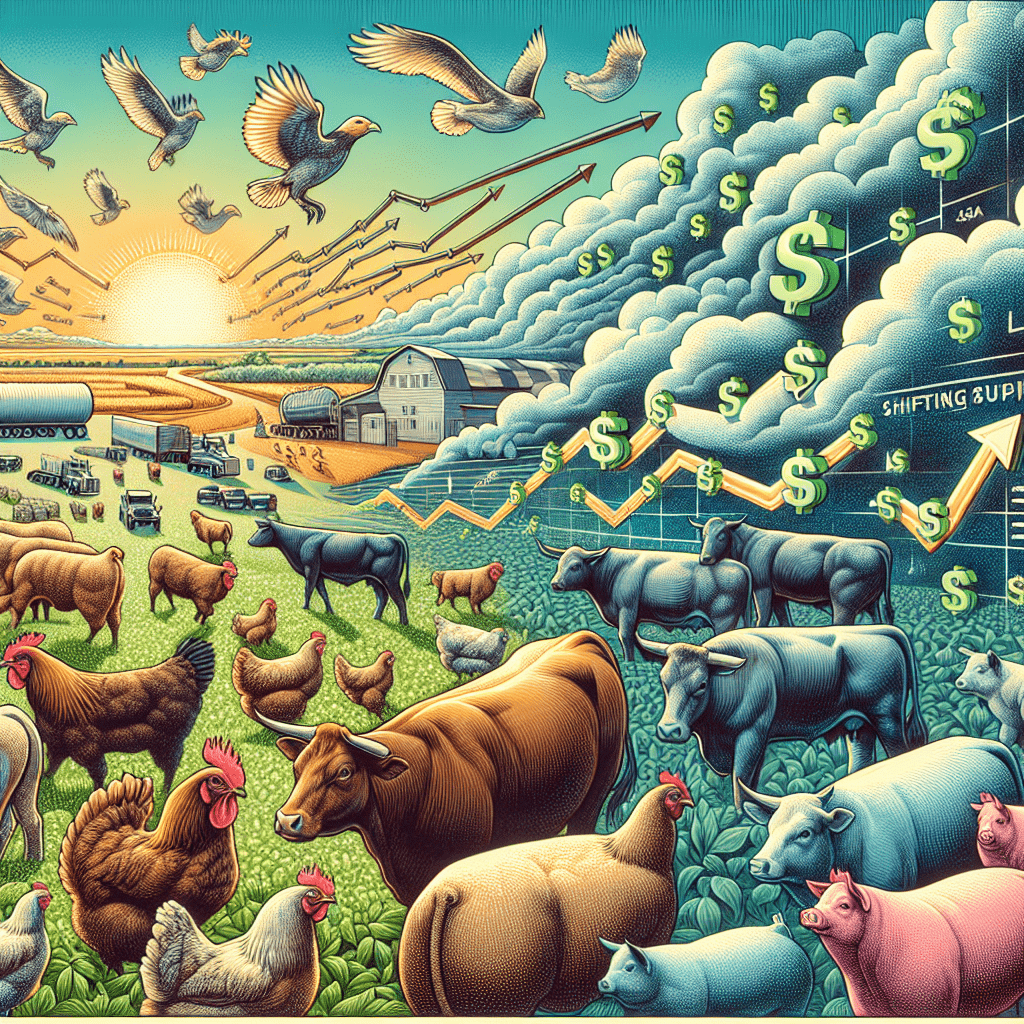
USDA’s WASDE Report Highlights Stronger Livestock and Dairy Prices in 2026

WASHINGTON, DC – The United States Department of Agriculture (USDA) has released its latest World Agricultural Supply and Demand Estimates (WASDE) report, which suggests a tightening in the livestock and dairy sectors, leading to stronger price expectations for 2026. This comes in the face of an overall increase in red meat and poultry production.
Beef and Pork Production on the Rise
The report indicates that beef production forecasts have been adjusted upward, primarily due to an increase in the slaughter of steers, heifers, and cows, along with slightly heavier dressed weights. Despite a confirmed smaller calf crop for 2025, the USDA anticipates a greater number of cattle being available outside feedlots for placement at the beginning of 2026. Additionally, pork production has been raised thanks to higher slaughter rates and modestly heavier weights observed during the first half of the year.
Poultry Production Forecasts Dipped
Conversely, the projections for broiler and turkey production have been reduced for early 2026. The latest hatchery data, combined with culling due to the Highly Pathogenic Avian Influenza, has negatively impacted poultry and egg production, resulting in tighter supplies anticipated in the first quarter of 2026.
Supportive Trade and Price Outlooks
Both trade and price outlooks are turning favorable. The USDA has raised beef import estimations, driven by a strong demand for lean processing beef. Meanwhile, pork exports have also seen an increase due to improved competitive positioning in the global market. Consequently, prices for fed-cattle and hogs have been raised across all quarters, with the all-milk price projected to reach $18.95 per hundredweight.
Farm-Level Takeaway
In summary, the rise in livestock prices signals resilient demand, despite the ongoing challenges of disease and herd adjustments that are reshaping supply expectations for 2026.
This structured article is formatted for seamless integration into WordPress and enhanced readability, using appropriate HTML tags to organize the content effectively.

