
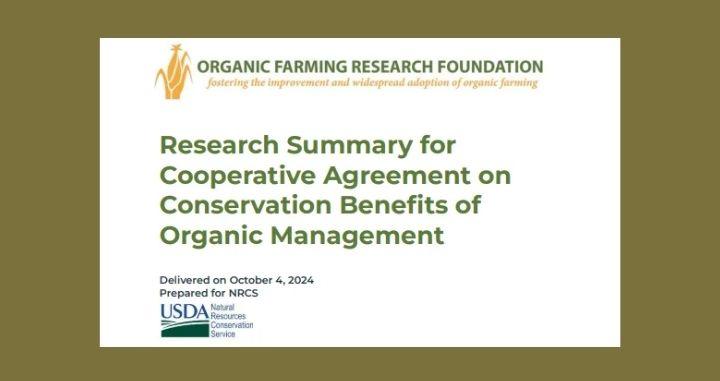
Latest Research Insights on Organic Agriculture
This document provides a summary of the latest organic agriculture research across a variety of topics, meant to equip NRCS staff, organic producers, and other interested stakeholders with comprehensive educational information on the conservation benefits of organic management. As interest in sustainable farming practices grows, understanding the implications of organic agriculture on environmental health, biodiversity, and soil quality becomes increasingly vital.
Key Areas of Research
1. Soil Health and Management
Recent studies show that organic farming practices improve soil structure, enhance nutrient availability, and increase microbial activity. The transition to organic farming can mitigate erosion and promote carbon sequestration, benefiting soil health and contributing to climate change mitigation.
2. Biodiversity Benefits
Organic farms tend to support higher levels of biodiversity compared to conventional farms. By minimizing the use of synthetic chemicals and promoting crop diversity, organic practices foster healthier ecosystems and contribute to the conservation of native species.
3. Water Conservation
Organic farming methods often include practices such as cover cropping and reduced tillage, which enhance water retention in the soil. This not only conserves water resources but also reduces runoff and the risk of contamination of local water bodies.
4. Pest and Disease Management
Innovative organic pest management strategies, such as crop rotation and the use of beneficial insects, are proving effective in minimizing pest outbreaks. This research highlights the resilience of organic farms in managing threats without the reliance on synthetic pesticides.
Conclusion
The latest findings underscore the numerous conservation benefits attributed to organic agriculture. As organic standards evolve and research continues to advance, stakeholders are encouraged to embrace these practices for sustainable agricultural solutions. Collaborative efforts among industry professionals can lead to enhanced environmental outcomes and improved livelihoods for farmers.
This research summary was produced with support from the United States Department of Agriculture’s Natural Resources Conservation Service (USDA-NRCS) under Cooperative Agreement No. FBC24CPT0013867. The contents are solely the responsibility of the authors and do not necessarily reflect the views of USDA-NRCS.
This HTML structure provides a clear and organized framework for your article while ensuring readability and accessibility for WordPress integration.

