
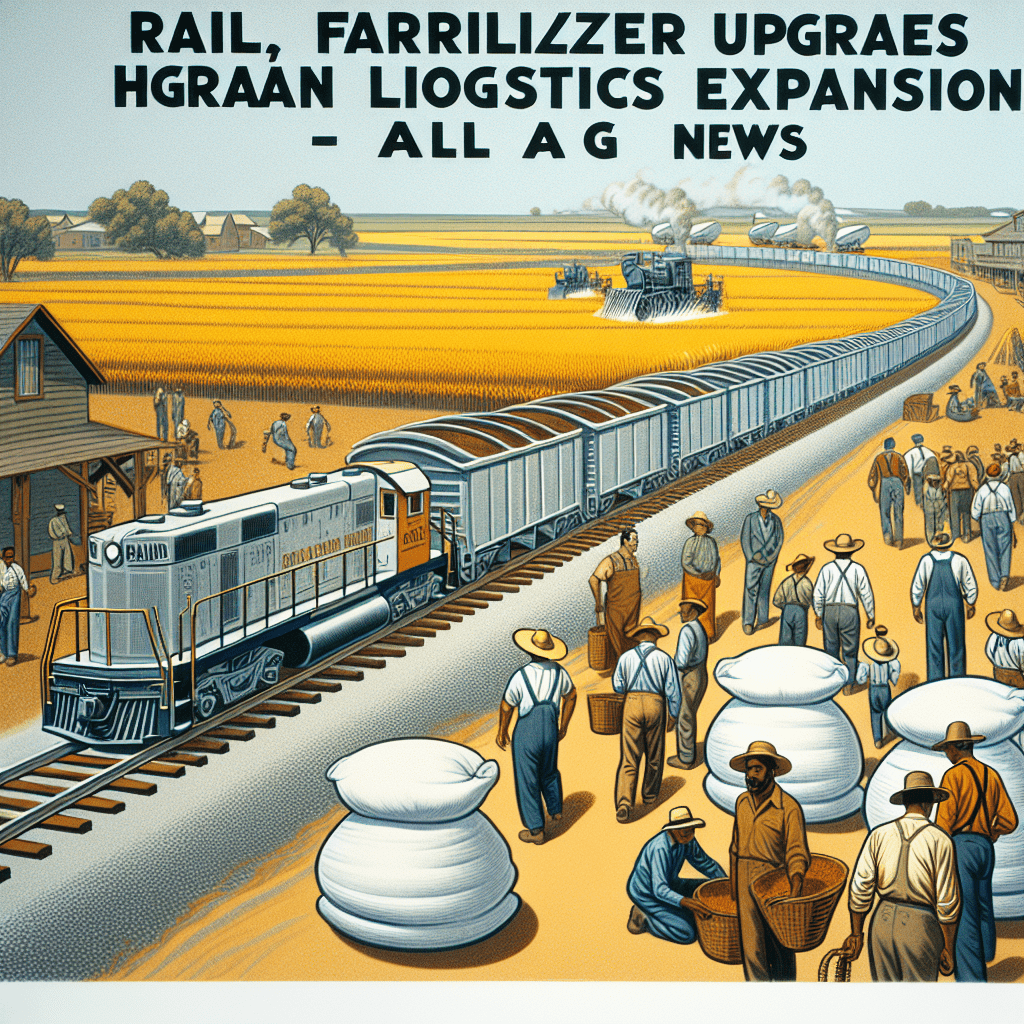
Rail Investments Transform U.S. Grain Export System
LUBBOCK, TX – Recent advancements in rail infrastructure and facility enhancements across the U.S. grain system are reshaping export dynamics, fertilizer logistics, and regional handling capacities.
Record Corn Volumes Signal Shifting Trends
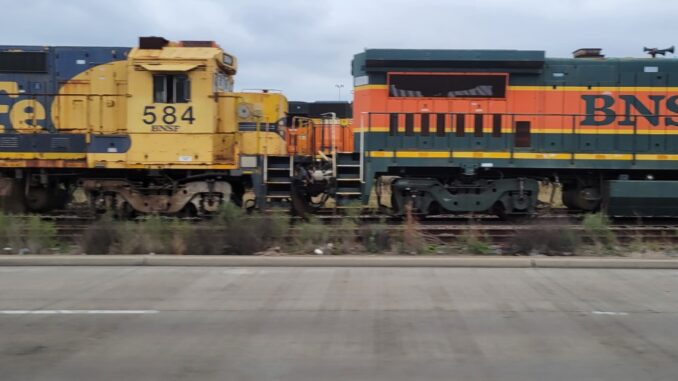
A report by GTR indicates that BNSF Railway achieved a remarkable milestone in 2025, establishing a new corn volume record that eclipsed its previous benchmark set in 2018. This surge in corn exports, particularly from Pacific Northwest (PNW) terminals, is noteworthy, with inspections hitting 24.2 million metric tons. This figure marks a dramatic increase of 128 percent compared to the average of the previous five years.
Shifting Export Patterns in Soybeans
Conversely, a decline in soybean demand, influenced by ongoing U.S.-China trade negotiations, has resulted in a redirection of shipments towards the Texas Gulf. Inspections at these ports reached 1.2 million metric tons during the months of October and November, showcasing the adaptability of the U.S. grain handling system.
Infrastructure Developments Across the Network
The expansion of infrastructure continues to play a crucial role in these changes. BNSF has inaugurated new grain and fertilizer facilities in Wisconsin and Kansas, alongside a renewable fuels site in California. In tandem with this, CHS Inc. has successfully upgraded its Galveston fertilizer terminal, dramatically increasing railcar loading speeds and enhancing cargo flexibility, despite experiencing a decline in fertilizer import volumes throughout 2025.
Enhancements in Iowa’s Grain Handling Capabilities
In a significant move for regional grain origination, Heartland Cooperative has launched a state-of-the-art 5.5-million-bushel shuttle-loading elevator situated along the Union Pacific Railroad lines in Iowa. This development aims to bolster grain handling capacity in south-central regions, which have historically lagged in infrastructure advancements.
Conclusion: A Focus on Export-Driven Logistics
Farm-level takeaway: The ongoing rail upgrades clearly indicate a strong, export-driven demand for enhanced logistical capabilities within the U.S. grain system. As infrastructure continues to evolve, stakeholders can expect increased efficiency and responsiveness to shifting market dynamics.

