

Urgent Call for Drought Assistance in Southern NSW
A collective of livestock producers in southern New South Wales is urgently advocating for the reinstatement of fodder and freight subsidies in response to the ‘catastrophic conditions’ currently affecting the region.
Over the past two years, the Greater Hume area, particularly around Holbrook and Jingellic, has experienced rainfall totaling less than half of its long-term average. The impacts of consecutive dry seasons have left local farmers without hay, forcing them to rely on increasingly scarce and costly fodder supplies.
According to a report compiled by local beef, sheep, and wool producers, the conditions in the area are dire. Agents are reportedly receiving over 50 inquiries per day for available fodder, with unprecedented destocking occurring throughout the region.
“Farmers are selling under pressure, sacrificing years of genetic investment in their breeding stock, and creating a long-term productivity lag that will take years to reverse,” the report cautioned.
The ramifications of this drought extend beyond the farms, affecting regional supply chains, processing industries, and food security across Australia.
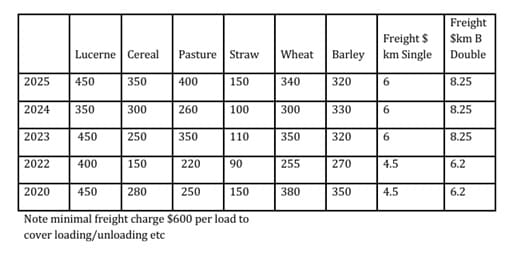
Fodder costs table from the Drought on the Ground: The Real Impacts for Greater Hume Beef, Sheep and Wool Producers.
Since 2023, limited hay production and the depletion of cereal hay supplies within a 250km radius have prompted producers to source feed from northern NSW and Queensland, with freight costs reaching upwards of $2,800 for some shipments.
“All 8000 large square bales available north of Dubbo last week sold within seven days, with 6000 being dispatched to South Australian farmers,” the report detailed.
The cost for hay has skyrocketed, increasing by $100/tonne within just 14 days to $420/tonne delivered, indicating an urgent need for resources as winter approaches.
Tim Ford, Managing Director of Feed Central, remarked on the unusual trade pattern, noting, “Historically, we would never ship hay from Queensland south, but the majority of South Australia and Victoria now face a total exhaustion of hay supplies.”
Immediate Drought Assistance Required
Recognized for its productive agricultural sector, the Greater Hume region is now grappling with an unprecedented crisis. “This is high reliable rainfall country, we have never experienced anything like this before,” the report emphasized.
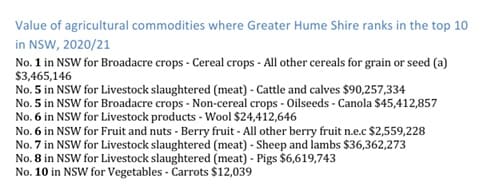
Value of agricultural commodities where Greater Hume Shire ranks in the top 10 in NSW, 2020/21.
The emotional toll of this crisis is palpable, with farmers reporting feelings of distress and fatigue from ongoing pressure. “Our agent received 54 calls in just three hours yesterday; they are acting as counselors right now,” the report lamented.
The group of producers is calling for immediate reinstatement of subsidies, mental health support, and a customized drought response strategy to be enacted before conditions reach crisis levels.
“This support isn’t about handouts; it’s about ensuring the viability of a crucial sector during these harsh times,” they stated.
The producers are urging the NSW Minister for Agriculture to visit the Greater Hume region to fully grasp the severity of the crisis at hand.
In response, the NSW Department of Primary Industries highlighted the assistance being provided to drought-impacted farms, including low-interest loans through the $250 million Drought Ready and Resilient Fund.
“These loans are crucial for farmers to address the immediate needs related to fodder, transport, and infrastructure improvements that can reduce energy costs,” stated a Department spokesperson.
“Throughout southern NSW, our Drought Adoption Officers have offered numerous consultations and workshops to support farmers in managing the ongoing challenges,” the spokesperson concluded.

