


Maximizing Profitability in the Beef Industry: Insights from Industry Experts
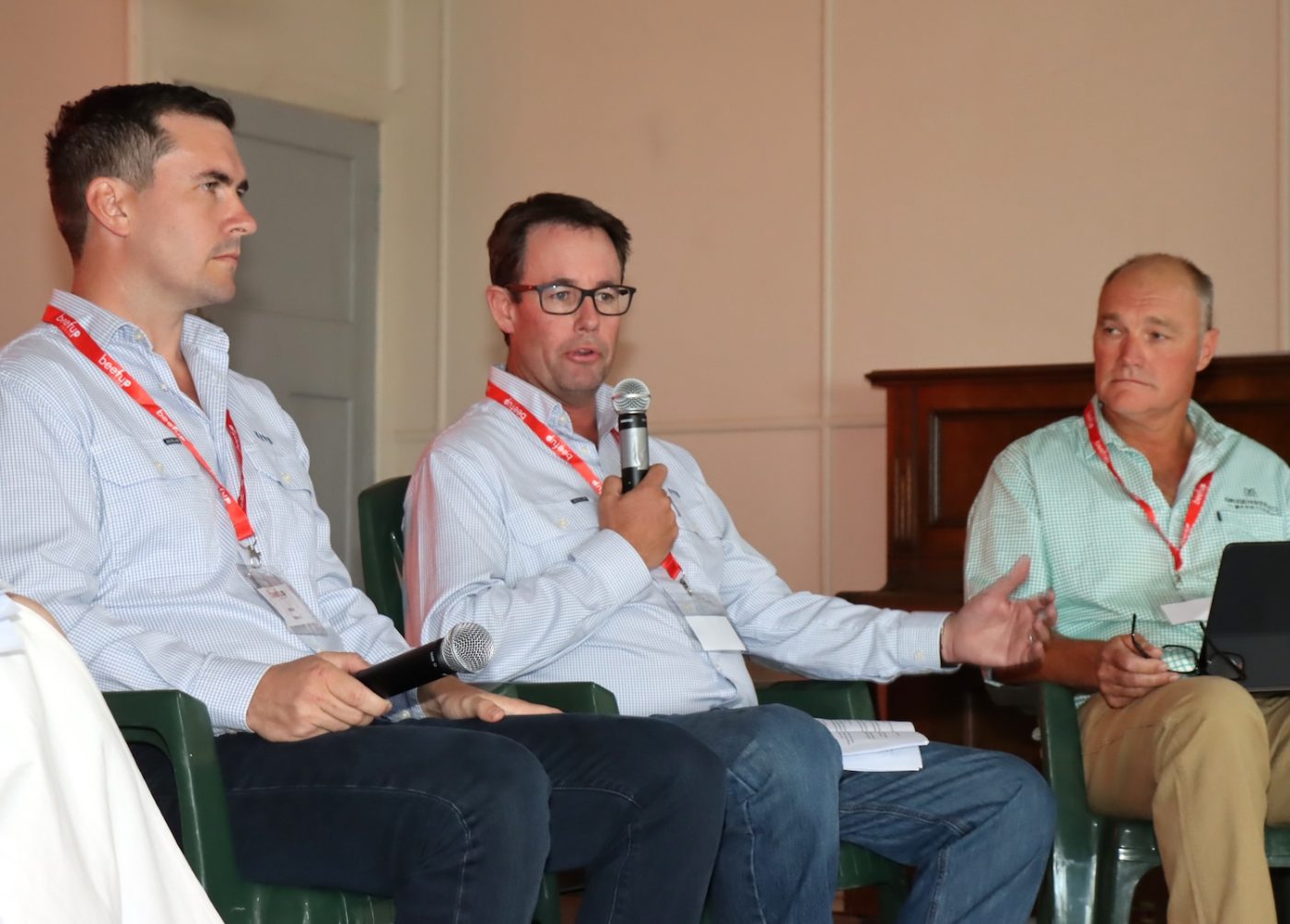
A paddock to processor panel featuring Ethan Mooney, Phil Lambert, and Kenton Peart.
“On a flight, you are instructed to put your own oxygen mask on first. I think that’s relevant in the beef industry,” said south-west Queensland grazier Kenton Peart at a recent Meat and Livestock Australia BeefUp forum.
Peart emphasized the importance of ensuring profitability within the beef industry, stating, “We have to look after our own profit margin first before delivering value down the supply chain.”
Mr. Peart and his wife Amy operate Greenstead Grazing, a certified organic beef operation located in the Augathella/Charleville district. They were part of a panel discussing how decisions across the supply chain affect performance and sustainability.
Strategies for Profit Generation
“There are only ever three ways to generate more profit in the beef industry: produce more kilos, produce those kilos for less, or get more money for your kilos,” he pointed out.
Targeting immediate improvements, Peart encouraged producers to refine their management practices, stating, “How is our pre-sale or pre-slaughter management? Small improvements in this can lead to big savings in terms of shrinkage and meat color.”
He added, “These basic improvements can often be made at little to no cost.”
Maintaining a Sustainable Cost Structure
“You can get in a lot of trouble accepting the premium as the status quo; the premium must be seen as a bonus,” Mr. Peart warned.
He highlighted the necessity of maintaining a baseline cost structure that ensures profitability whether or not premium prices hold.
Feedlot Readiness: A Key to Success
Phil Lambert, General Manager of Condamine Feedlot for Teys Australia, shared vital insights on animal handling for successful feedlot entry. “Animals that are profitable on the farm are going to be profitable through the feedlot,” he said.
He stressed the importance of ensuring animals are ready for the transition, which includes early handling to reduce stress when they arrive.
Utilizing Data for Informed Decisions
At the processing end of the supply chain, Ethan Mooney, Livestock Project Manager with Teys Australia, urged producers to leverage data to make informed on-farm decisions: “Make decisions based on area-specific data.”
Mooney encouraged producers to gather data from their respective supply chains, including metrics like average daily gains and conversion ratios, to drive profitability.
As the beef industry evolves, the insights shared at the Morven BeefUp forum underscore the cooperative efforts needed to enhance profitability from farm to processor.
This structured article promotes readability and provides clear segmentation of topics relevant to profitability in the beef industry, ensuring it adheres to best practices for web integration.




