
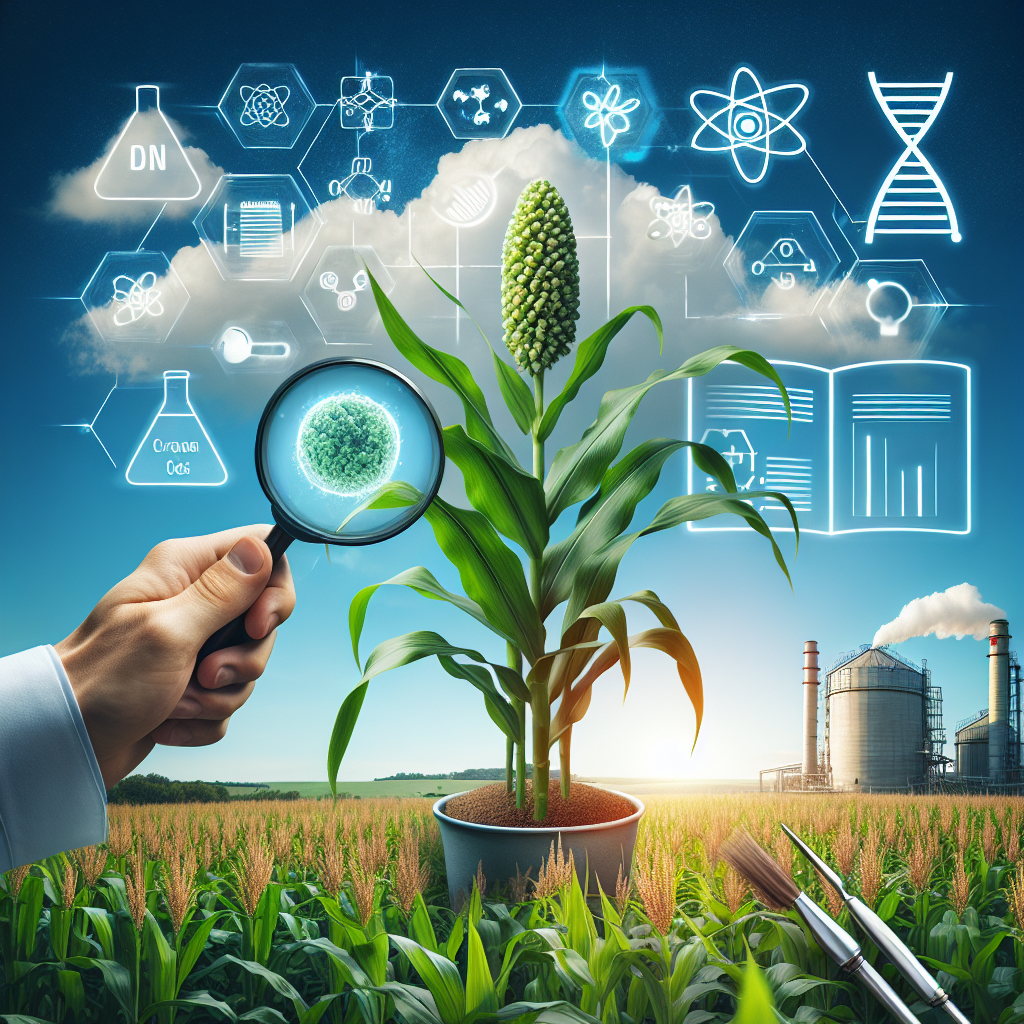

Enhancing Sorghum: A New Initiative for Stress-Tolerant Bioenergy Crops
LUBBOCK, TX – In an exciting development for sustainable agriculture, a new collaborative project led by the Donald Danforth Plant Science Center aims to unlock the genetic secrets of sorghum, a crop known for its remarkable resilience to environmental stressors. Funded by a substantial $2.5 million grant from the U.S. Department of Energy, this three-year initiative focuses on understanding how sorghum can withstand challenges such as drought and extreme heat.
The Importance of Sorghum in Bioenergy Production
Sorghum is increasingly recognized as a vital bioenergy crop in the United States, especially because it can thrive in conditions where other crops struggle. By delving into its genetic traits, researchers hope to facilitate the expansion of sorghum farming into resource-constrained regions, offering a solution that does not compete with traditional food crops.
A Comprehensive Research Approach
The research team plans to analyze a diverse array of sorghum lines under differing environmental conditions in Missouri and Arizona. This hands-on approach includes:
- Investigating natural genetic variation and gene networks.
- Employing high-resolution, sensor-based phenotyping.
- Utilizing remote sensing and GeoAI tools to enhance data analysis.
- Applying advanced gene-editing methods.
These methods will allow researchers to connect genetic information with field performance, focusing on oxidative stress biomarkers and observable morphological changes.
A Collaborative Effort
This ambitious project brings together distinguished teams from the Danforth Center, the University of Arizona, and Saint Louis University. By pairing plant genetics expertise with innovative sensing technologies, the project aims to monitor sorghum’s responses throughout entire growing seasons, paving the way for enhanced bioenergy crop resilience.
Farm-Level Implications
The outcomes of this research could prove transformative for farmers. By fostering stronger sorghum genetics, stakeholders could broaden the viability of bioenergy crops in challenging climates. This initiative could lead to a more resilient agricultural landscape, capable of adapting to the pressures of climate change.
Conclusion
In summary, this multi-institutional project merges cutting-edge research with practical agricultural goals. By enhancing the adaptive traits of sorghum, researchers aim to ensure its place as a cornerstone of sustainable bioenergy production in the United States.
This format integrates seamless content presentation, uses varied headings for better readability, and maintains appropriate HTML structure for WordPress publishing.

