
Exploring Seeding Rates of Cover Crops: Enhancing Biomass and Nutrient Content
By Mary Hathaway, OFRF’s Research & Education Program Manager, and Anthony Reyes, FLT Program participant

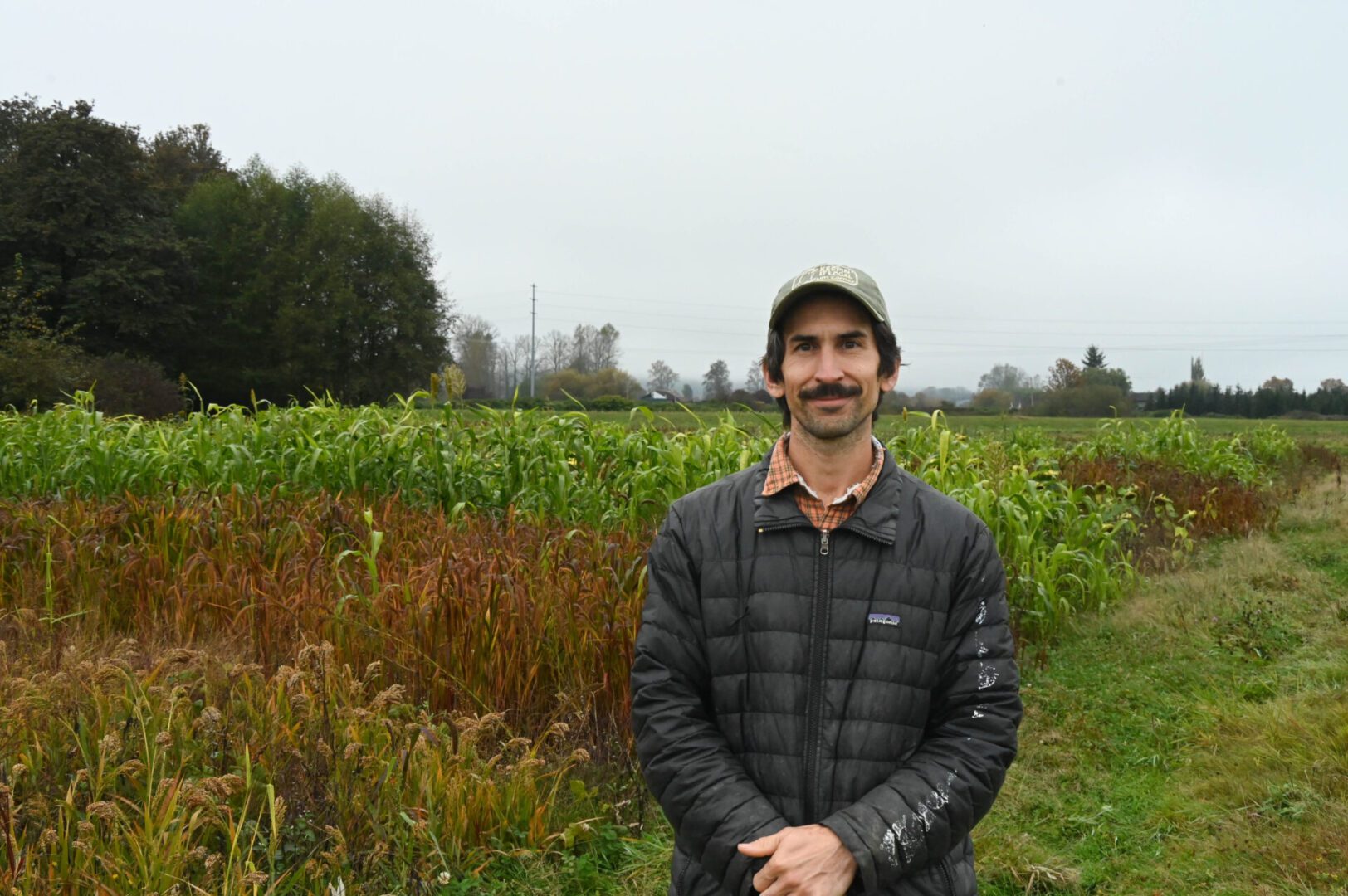
Anthony Reyes, FLT Program Participant. Photo credit: Washington Soil Health Initiative.
Oxbow Farm & Conservation Center, a nonprofit organization situated in the floodplains of Snoqualmie Valley, WA, is dedicated to promoting sustainable agriculture. Under the leadership of Agricultural Program Manager Anthony Reyes, the 81-acre certified organic farm explores various climate-adaptive agricultural practices. Reyes and his team focus on balancing agricultural demands with ecosystem health through dedicated land management, ecological restoration, and educational outreach.
The farm is known for its diverse crop cultivation, optimized for the unique characteristics of the Snoqualmie Valley floodplain. A vital aspect of their farming practice is the rotation of crops, which plays a crucial role in soil restoration and nutrient regeneration. Each year, fields are intentionally removed from production and fallowed with cover crops to safeguard the watershed, enhance nutrient density, and control weeds, pests, and diseases.
Identifying Effective Cover Crops
Facing climatic challenges, erosion, and persistent weed pressure, Anthony Reyes recognized the importance of selecting a cover crop that aligns with the farm’s ecological goals. The ideal cover crop would not only contribute to biomass enhancement but also exhibit resilience against drought conditions. One of the key strategies considered was manipulating the seeding rate of cover crops, leading Reyes to investigate whether the standard recommendations for seeding densities were optimally suited for their specific soil conditions.

