
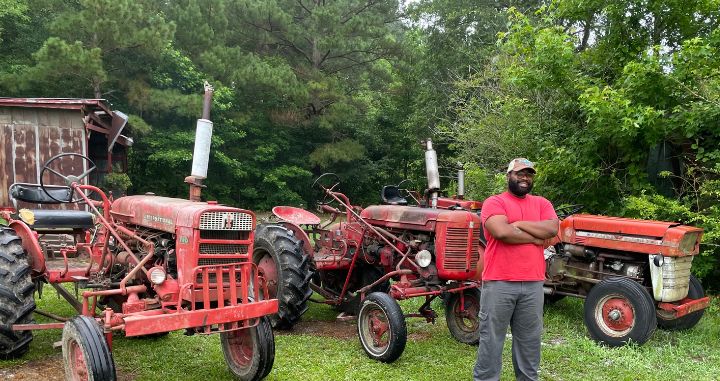
Written by Rebecca Champagne, PhD, OFRF Conservation Scientist
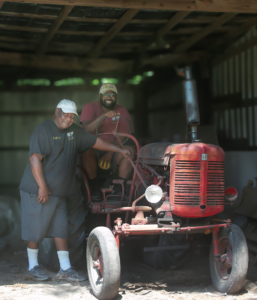
Robert and Dakota are the father-son team behind Moore Family Farm.
Revitalizing Agricultural Heritage: The Moore Family Farm Story
Situated in the heart of Warsaw, North Carolina, Moore Family Farms is a testament to the power of sustainability and family values in agriculture. Founded in 1833, this family-owned and operated farm is now led by Robert Moore and his son Dakota.
Transitioning to Sustainable Practices
Covering 260 acres, the farm utilizes 22 acres for production—12 of which are conventional and 10 certified organic. On the organic side, they cultivate an array of crops including melons, collard greens, and cabbage. Meanwhile, the conventional portion yields bell peppers, tomatoes, and cantaloupe.
“Our farm was revived in 2018, focusing on sustainable practices to honor our heritage while adapting to modern agricultural trends,” Dakota explained.
Moore Family Farms primarily sells its produce wholesale through Happy Dirt and previously had a contract with the Second Harvest Food Bank through the Local Food Purchase Assistance program. Unfortunately, they lost this contract due to federal funding freezes. Currently, they are exploring additional markets through Feast Down East, a local non-profit dedicated to connecting farmers with consumers.
Entering the Organic Market
In 2020, the Moore family began the process of transitioning part of their farm to organic production and became certified in late 2023. Rising input prices during this period motivated their decision. Dakota shared, “Fertilizer prices skyrocketed between 2019 and 2021, and we couldn’t afford to buy them. We conducted extensive economic research into organic practices and decided to make the jump.”
Market demand for organic produce and the family’s commitment to environmental stewardship were also pivotal in their move toward certification.
Innovating Through High Tunnels
During his studies at North Carolina Agricultural and Technical (A&T) State University, Dakota gained hands-on experience in agricultural research involving high tunnel systems. He observed firsthand how these structures improve crop resilience during extreme weather conditions.
“With our high tunnel, we can now harvest watermelons before the Fourth of July,” Dakota stated, emphasizing the various advantages of high tunnels, including extended growing seasons and reduced vulnerability to harsh weather conditions.
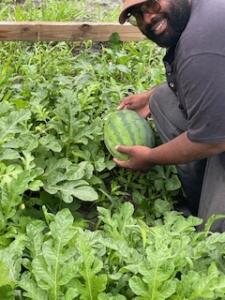
Dakota with watermelon grown on their farm.
Since establishing their high tunnel for organic watermelon production, the farm has seen improvements in crop quality and protection against extreme weather fluctuations. This innovation allows the Moores to plant and harvest crops earlier and extends their growing season.
Building Soil Health with Cover Crops
To further enhance their methods, Moore Family Farms incorporated cover crops into their management practices. These crops provide various benefits, including:
- Weed suppression
- Soil erosion control
- Improved water retention
“Initially, we used plastic mulch to trap soil moisture, but we wanted a more sustainable approach,” Dakota mentioned. “By using cover crops consistently, we’ve kept more moisture in the soil and improved soil health.” According to their soil test results, one field saw an impressive increase in soil organic matter from 1.76% to 4.26% over three years.

