

Australia Forges Ahead in Global Beef Market Despite Challenges
Delegates at the Gulfood event in Dubai this week – Australian red meat presence upper right
Despite ongoing uncertainties in the global beef industry due to tariffs, quotas, and geopolitical tensions, Australia is well-positioned to meet strong global demand for meat protein in 2026. This optimism was evident at the recent Gulfoods trade event held in Dubai, a focal point for the food and beverage industry.
As the world’s largest food and beverage trade show, Gulfoods 2026 attracted approximately 8,500 exhibitors from around the globe, with visitors hailing from 195 countries and utilizing the vast 240,000 square meters of the Dubai World Trade Centre and Expo City.
Around 33 Australian beef, lamb, and goat meat exporters showcased their products at this year’s event, marking a strong international presence beyond just the Middle Eastern market. Competitors such as Brazil, the United States, Argentina, and Uruguay also made significant appearances.
Throughout the five-day showcase, Australian red meat representatives engaged in discussions with both existing and prospective customers from various regions, including the Middle East, Europe, Asia, and North America.
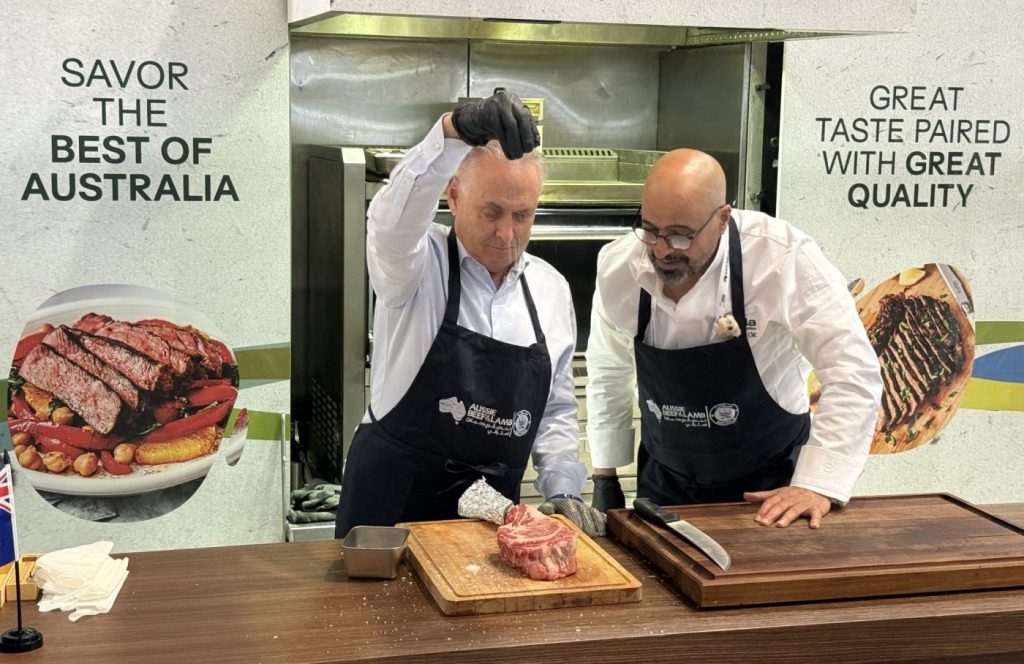
Australian Trade Minister Don Farrell demonstrates a tomahawk steak at the MLA stand
Notably, Australian Trade Minister Don Farrell attended the event, eliciting inquiries about Australia’s Free Trade Agreement with the European Union. Veteran exporter Gerard Meyn from Stella Foods noted the evolution of Gulfood into a global hub for the red meat industry, emphasizing its significance as a networking platform for buyers and sellers.
“Global meat protein customers now see this event as a meeting point,” Meyn stated. “Despite global challenges, there is a zest for business, especially in value-added products.” He also highlighted notable increases in goat meat demand in the Middle East, attributing this growth to market shifts influenced by tariff hikes in the US.
Meyn further elaborated on currency fluctuations impacting discussions, stating, “While currency is an issue, the global market currently faces a product shortage, making customers eager to secure supply.” He expressed concern over Australian beef quotas with China, articulating that early quota fulfillment could limit future prospects.
Addressing Tariff Impacts
The impact of China’s quotas and tariffs on imported beef was a prominent theme throughout the event. There are unconfirmed reports suggesting Brazil may have established a management scheme for its 2026 China shipments, potentially positioning it well in the competitive landscape.
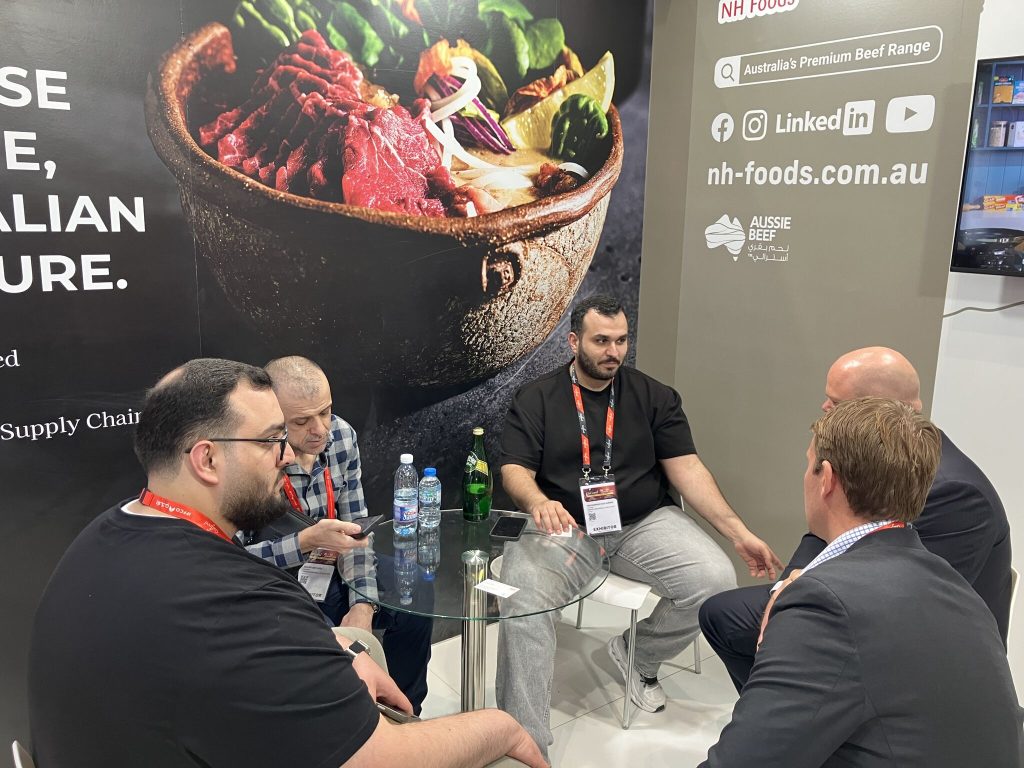
NH Foods sales staff engage with customers at Gulfoods this week
Analysts speculate that Brazilian firms may dominate the Chinese market, potentially creating competitive pricing pressure on Australian exporters in other markets like the US. Despite these challenges, there are emerging opportunities for Australian beef exports, particularly as markets in the UK and Europe remain undersupplied.
In conclusion, as the Australian beef industry navigates potential challenges posed by tariffs and global market shifts, there remains a resolute appetite for Australian meat products worldwide. With a diverse range of export markets and a keen focus on adaptability, Australian exporters continue to position themselves for growth and success in the competitive global landscape.
This article is structured to be easily integrated into WordPress while maintaining clarity and readability. Adjust images and captions as needed for context and relevance on your site.

