
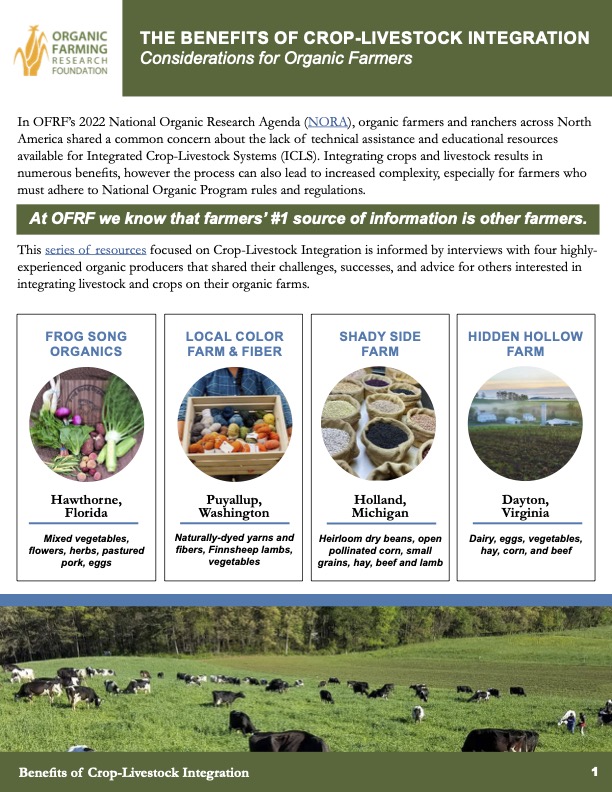
Exploring Integrated Crop-Livestock Systems: Insights from Organic Farmers
In the 2022 National Organic Research Agenda (NORA) published by the Organic Farming Research Foundation (OFRF), a significant concern echoed among organic farmers and ranchers across North America was the need for enhanced technical assistance and educational resources dedicated to Integrated Crop-Livestock Systems (ICLS). These systems, while beneficial in numerous ways, present a range of complexities that can be daunting for farmers who operate under the regulations of the National Organic Program.
To address these complexities, OFRF has compiled a series of resources focused on Crop-Livestock Integration. This initiative draws from interviews with four seasoned organic producers who candidly shared their experiences, challenges, and successes regarding the integration of livestock and crops on their farms. Their insights offer valuable guidance for those contemplating a similar approach.
Benefits of Crop-Livestock Integration
Integrating crops and livestock not only creates a more diverse farming system but also brings about numerous advantages, such as:
- Reduced Inputs: The synergy between crops and livestock can lower the need for fertilizers and pesticides.
- Improved Soil Health: Livestock manure contributes to enhanced soil tilth and overall soil health.
- Higher Nutrient Density: Both food and forage grown in integrated systems tend to have higher nutrient concentrations.
- Pest Control: Integrated systems can naturally mitigate pest issues in both crops and livestock.
- Reduced Mechanical Cultivation: The integration helps decrease reliance on heavy machinery, leading to lower energy costs and soil compaction.
Challenges and Considerations
While the benefits of ICLS are substantial, farmers must also navigate various challenges. These may include:
- Understanding the complexities of managing different livestock and crop needs.
- Adhering to organic certification standards, which can add layers of complexity to farm management.
- Finding the right balance between crop and livestock systems to maximize benefits without overwhelming the farm’s operations.
As shared by the interviewed farmers, recognizing these challenges early and developing strategic plans can lead to successful integration and improved farm viability.
Getting Started with ICLS
For those interested in implementing Integrated Crop-Livestock Systems on their organic farms, consider the following steps:
- Research: Gather information on best practices and successful case studies.
- Plan: Develop a clear management plan that outlines the integration process.
- Start Small: Begin with a pilot project to understand the dynamics without overcommitting resources.
- Seek Support: Engage with local agricultural organizations, extension services, and fellow farmers for guidance and mentorship.
Conclusion
Integrating crops and livestock can lead to a sustainable and productive farming model, aligning with the goals of organic production. By learning from experienced farmers and taking strategic steps, new and existing organic producers can harness the full potential of ICLS. With the right resources and support, achieving success in crop-livestock integration is within reach.
This structured article is organized with appropriate HTML tags and formatting for smooth integration into a WordPress site while ensuring clarity and readability.

