
Addressing the Challenges of Integrated Crop-Livestock Systems in Organic Farming
In the 2022 National Organic Research Agenda (NORA) published by the Organic Farming Research Foundation (OFRF), a significant concern emerged among organic farmers and ranchers across North America: the limited availability of technical assistance and educational resources tailored for Integrated Crop-Livestock Systems (ICLS). While the integration of crops and livestock can yield numerous environmental and economic benefits, it introduces additional complexity, particularly for farmers who must navigate the regulations set forth by the National Organic Program.
Understanding the Benefits and Complexities of ICLS
Integrating livestock with crop production offers a holistic approach to farming that can enhance soil health, diversify farm income, and improve overall sustainability. Despite these advantages, the transition requires careful planning and a deep understanding of various interrelated systems, especially for those adhering to organic standards.
Insights from Experienced Organic Producers
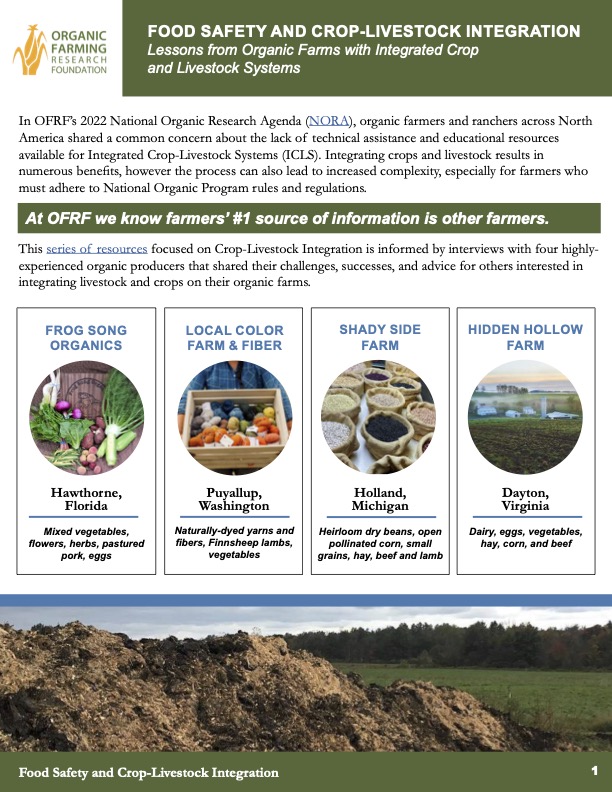
This series of resources, focused on Crop-Livestock Integration, draws from in-depth interviews with four seasoned organic producers. These interviews illuminate their unique challenges, share their successes, and offer valuable advice for those looking to implement integrated farming practices.
Food Safety in Integrated Systems
Food safety is a paramount concern for all farmers, and for those managing integrated systems, the stakes are even higher. It is crucial for organic farmers to identify and mitigate critical points in the food safety chain. In this section, we will explore effective strategies for enhancing food safety in ICLS and provide information on resources available to assist farmers in developing comprehensive food safety plans tailored to their specific operations.
Conclusion: A Call for Increased Support
As the demand for organic produce continues to rise, it is essential to support farmers in adopting innovative practices like Integrated Crop-Livestock Systems. By enhancing educational resources and technical assistance, we can empower organic farmers to navigate the complexities of integration while maintaining compliance with organic standards. Together, we can foster a more resilient and sustainable organic farming community.
This structured article is designed for seamless integration into a WordPress platform, enhancing readability with appropriate headings, paragraphs, and a concluding section.

