

University of Queensland Calls Farmers for Cattle Tick Samples to Combat Resistance
Dr Hannah Siddle. (Photo: Megan Pope)
The University of Queensland (UQ) is reaching out to cattle producers for assistance in a critical research initiative aimed at understanding the escalating resistance of cattle ticks to chemical treatments. This resistance is posing a significant challenge for many producers across northern Australia.
Urgency for Producer Collaboration
Chemical treatments remain a vital tool for managing cattle ticks, which can significantly impact beef and dairy farms by affecting weight gain, milk production, and facilitating the spread of diseases. However, the burgeoning resistance of ticks to these chemicals is leaving producers with diminishing treatment choices.
UQ Research Fellow Dr. Hannah Siddle emphasized the importance of gathering ticks from diverse regions in northern Australia. “We would like producers to send us ticks, even if they’re not particularly worried about resistance,” she stated. “This comprehensive testing will enhance our understanding of chemical resistance across Australia.”
Research Objectives
As part of this initiative, Dr. Siddle’s team will not only test for existing chemical resistance but also sequence the genomes of both resistant and susceptible tick populations. The goal is to identify genetic markers that can facilitate the development of swift, reliable, and cost-effective molecular tests.
“Testing will help pinpoint populations of ticks that are resistant or susceptible to various chemicals across different areas,” Dr. Siddle explained.
For this research, they will employ a cutting-edge testing kit named RaTexT, which was developed by Dutch researchers and tested in Brazil. “These kits provide results in just 24 hours, a significant reduction from the conventional six-week turnaround for standard diagnostic testing,” highlighted Dr. Siddle.
Enhancing Chemical Efficacy
Recently, Tony Perrett, Queensland’s Minister for Primary Industries, announced a review of cattle tick management, pinpointing chemical resistance as a major concern. Dr. Siddle’s research aims to map chemical resistance throughout northern Australia, enabling producers to make informed decisions about chemical use.
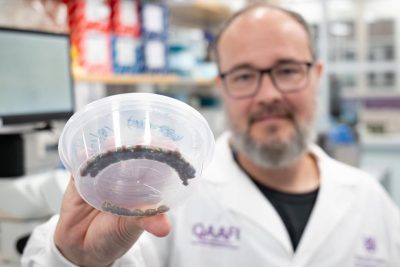
Dr Guilherme Klafke. (Photo: Megan Pope)
Collaborating with Dr. Siddle is Dr. Guilherme Klafke from Brazil’s State Centre for Diagnosis and Research in Animal Health, who highlighted the benefits of the RaTexT kits in crafting better tick management strategies. “The advantage of this test lies in its rapid results, providing essential information for farmers when deciding which products to use on infested animals,” he noted.
How Producers Can Participate
This vital research is supported by Dr. Siddle’s Australian Research Council Mid-Career Industry Fellowship and involves partnerships with leading animal health companies like Boehringer Ingelheim and TBD International.
Producers interested in contributing ticks for resistance testing are encouraged to complete a survey and follow instructions on how to collect and send ticks to UQ for analysis.
For further details on participation in this important study, producers can reach out to Dr. Hannah Siddle at h.siddle@uq.edu.au.
This structured HTML format is designed for seamless integration into WordPress, ensuring improved readability and organization.

